Author: Hannah Prendecky
What We Learned from the Community of the DigHum Conference 2026

Results from our online Survey
Addressing the societal challenges of digital technologies requires collective action rather than isolated initiatives.
(Verbatim Conference Participant)
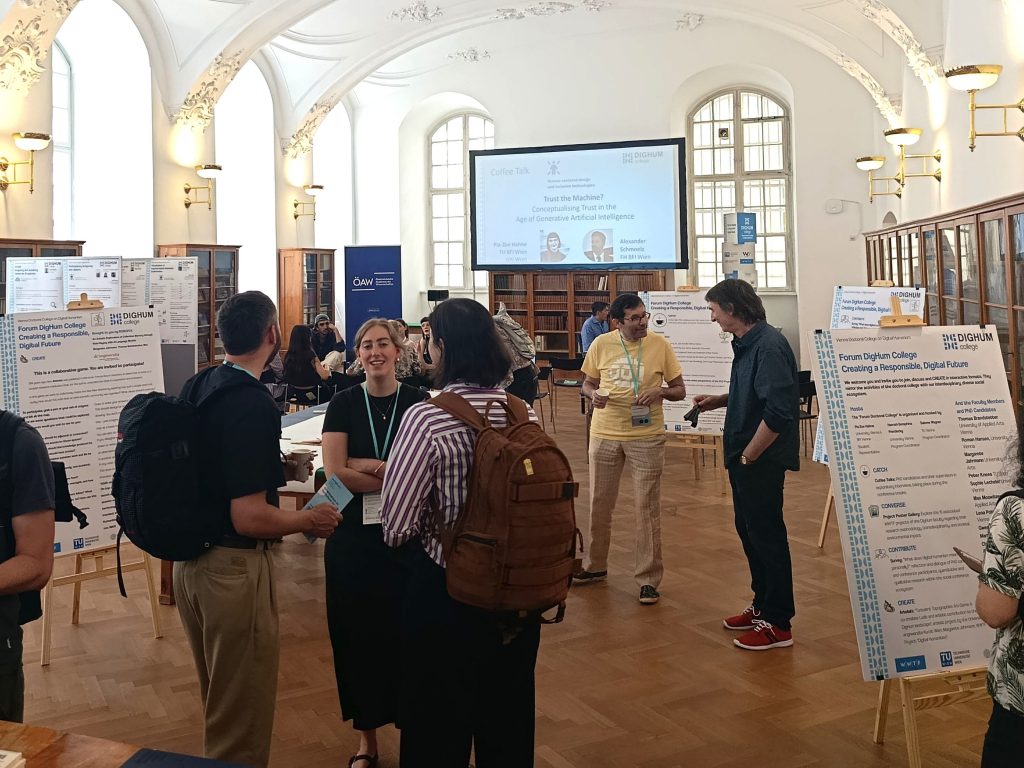
Researchers, practitioners, policymakers, and innovators who share a common interest: shaping technology for the benefit of society. To better understand our community and their perspectives on Digital Humanism, the Vienna Doctoral College on Digital Humanism invited conference participants to take part in a short survey during the event.
The survey represents a sample of conference attendees, what was the motivation to join the conference, how they understand Digital Humanism, and what they take away from the event.
Why do people come to the DigHum Conference? The power of an interactive ecosystem beats “pure” networking.
The survey shows that participants primarily attend the conference to engage with critical questions surrounding digital technologies rather than simply learning about the latest technical innovations.
The strongest motivation by far was the opportunity to explore diverse and critical perspectives on new technologies with the aim to:
- gaining inspiration for professional work,
- learning about innovation and emerging developments,
- discussing approaches for dealing with new technologies.
This suggests that the DigHum community values meaningful dialogue and interdisciplinary exchange over traditional networking alone: ECOSYSTEM over NETWORKING!
A broad understanding of Digital Humanism
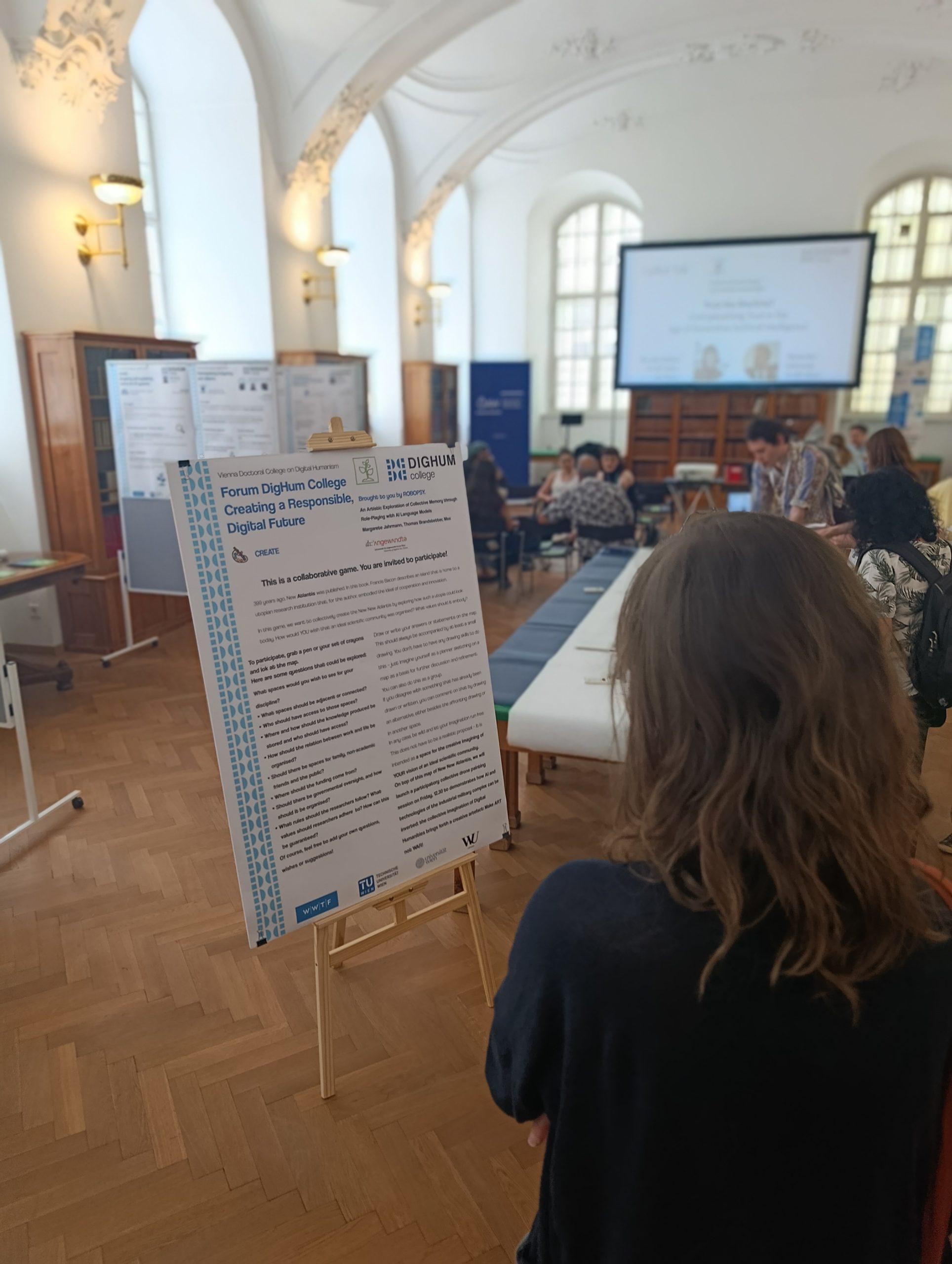
The responses illustrate that participants view Digital Humanism as a multidimensional concept rather than a single discipline.
Open comments throughout the survey highlighted themes such as:
- people-centred technology,
- interdisciplinary collaboration,
- ethical responsibility,
- democratic governance,
- AI infrastructure,
- and the societal impact of emerging technologies.
Rather than focusing exclusively on technological innovation, respondents consistently connected Digital Humanism with questions of responsibility, collaboration, and public interest.
Key takeaways from the conference
The qualitative responses paint an encouraging picture of what participants experienced during the conference. Several attendees emphasised the value of encountering multiple perspectives: “Different perspectives and takes on current developments of AI and digital infrastructures.”
Others highlighted the collaborative spirit of the community:
“I’m not alone – there are many like-minded people.”
Participants also appreciated the interdisciplinary nature of the conference, recognising that Digital Humanism requires collaboration across research fields, policy, and practice.
Looking ahead
One particularly encouraging observation is that many participants indicated they would like to return for future editions of the conference. The feedback suggests that DigHum is increasingly recognised as a place where meaningful conversations about technology and society can happen across disciplinary boundaries.
For the Vienna Doctoral College on Digital Humanism, these results reinforce the importance of creating spaces where researchers, practitioners, policymakers, and civil society can jointly reflect on the future of digital technologies.
We thank sincerely everyone who participated in the survey. Your feedback contributes to a better understanding of the growing Digital Humanism community.