
Author: Salomé Wagner
How digital humanism moves from a conference stage into everyday practice: deep-dive interviews at the DigHum Conference

The Digital Humanism Conference 2026 also allowed us to conduct deep-dive interviews with participants. The goal was to explore how digital humanism is defined in own words, how attitudes toward emerging technologies evolve and – most importantly: How are these perspectives transfered into professional and personal contexts. The summary of the discussion between an AI researcher, a pre-doc student, a lawyer/jurist and a communication expert framed the topic of the 2026 conference: Orientation in turbulent times.
Demystify Artificial Intelligence
The views traced a clear path forward: preserve human agency, design for inclusion, and demystify AI so that responsibility remains with people, not machines.
How is the term “Digital Humanism” precepted and defined in own words?
- It decribes a human–technology bridge where technology serves humans, not replaces them; emphasizes ethics, interdisciplinarity, and designing systems that benefit people and remain accessible and inclusive for diverse users.
- It is an “ethics of the digital” rather than “digital humanism,” to keep human responsibility central and avoid ascribing agency to machines; influenced by contemporary digital ethics (e.g., Floridi) but critical of notions that shift responsibility from humans to technology.
We are talking about human choices.
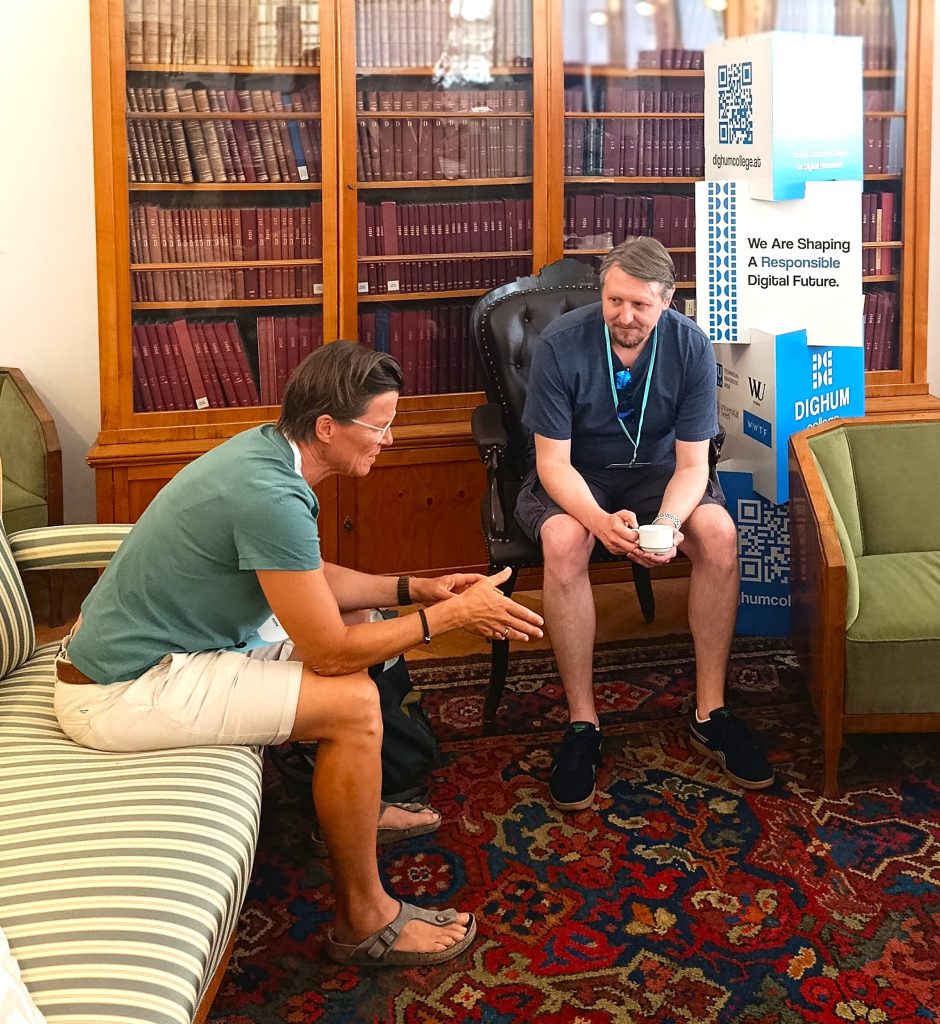
Digital humanism is not a slogan, it is an interdisciplinary commitment to ensure that technologies serve human flourishing. The AI researcher framed it as a practical design mandate: interfaces must be inclusive not only for people with disabilities but also for users across the full spectrum of technical experience.
That means rethinking defaults, guidance, and error tolerance so everyone can act responsibly and confidently. It also means using design to cultivate good habits: encouraging source-checking, prompting reflection on uncertainty, and making it easier to spot bias and misinformation.
The framing that attributes “agency” to digital systems has been challenged, because Ethics remains a human discipline. When we talk about the “ethics of the digital,” we are talking about human choices in conception, data curation, development, deployment, and governance. Assigning agency to machines risks blurring accountability and undermining the human responsibility to guide AI.
The fear or rejection of technology rarely helps. Technologies are tools; their impact depends on how we build and govern them. Today’s systems enable unprecedented surveillance, profiling, and behavioral nudging. If a system persistently narrows choices, coaxes consent, or obscures what it collects and infers, it has crossed a line.
About the Global South: digital labor demands ethical standards
This is not only about code. It is also about labor, power, and global inequality. Behind the polished interfaces are workers who label data, moderate content, and help train models—often in the Global South or in hidden corners of the North—frequently at low pay and with limited protections. Just as industrial revolutions exposed factory abuses, AI’s rapid scaling reveals supply chains of digital labor that demand ethical standards. A responsible AI strategy must include fair contracting, transparent sourcing, and measurable labor safeguards.
The transfer from the conference stage into daily life
A recurring theme at the conference was literacy, technical and ethical. Too many decisions are made without a working grasp of how large language models function, where they fail, and why they hallucinate. Demystifying AI is essential: when leaders and citizens understand limitations, they can set proportionate rules, ask better questions, and avoid magical thinking. This sober view opens room for “secular” governance—concrete policies, audits, and design choices—over speculative promises of salvation through superintelligence.
In brief from these discussions: What should organizations and teams do now? Some takeaways framed into actions, from conference stage into daily life:
- Design for inclusivity across abilities and technical proficiency; test with diverse users early and often.
- Make uncertainty and sourcing visible; prompt users to verify critical claims and provide easy paths to evidence.
- Publish model facts: training data provenance where possible, known limitations, and intended use cases.
- Audit end-to-end supply chains, including data workforces; require living wages, mental-health safeguards, and grievance mechanisms.
- Build internal AI literacy for leaders, product managers, designers, and legal/compliance teams.
- Keep humans accountable: assign owners for decisions, document trade-offs, and track impacts over time.
What are your reflections about these actions? What do you think is the most important to transfer into practice?
Digital humanism is a culture, not a checklist.
It thrives where teams invite critique, reward transparency, and value humanistic education—critical thinking, ethics, and the long arc from Plato to today’s debates. The goal is not to resist technology, but to shape it and to act responsibly together. The conference is organised by Digital Humanism | Verein zur Förderung des digitalen Humanismus. More Information: https://dighum.wien