
Author: Salomé Wagner
Review of a colourful Kick-off: Seeding a Responsible Digital Future
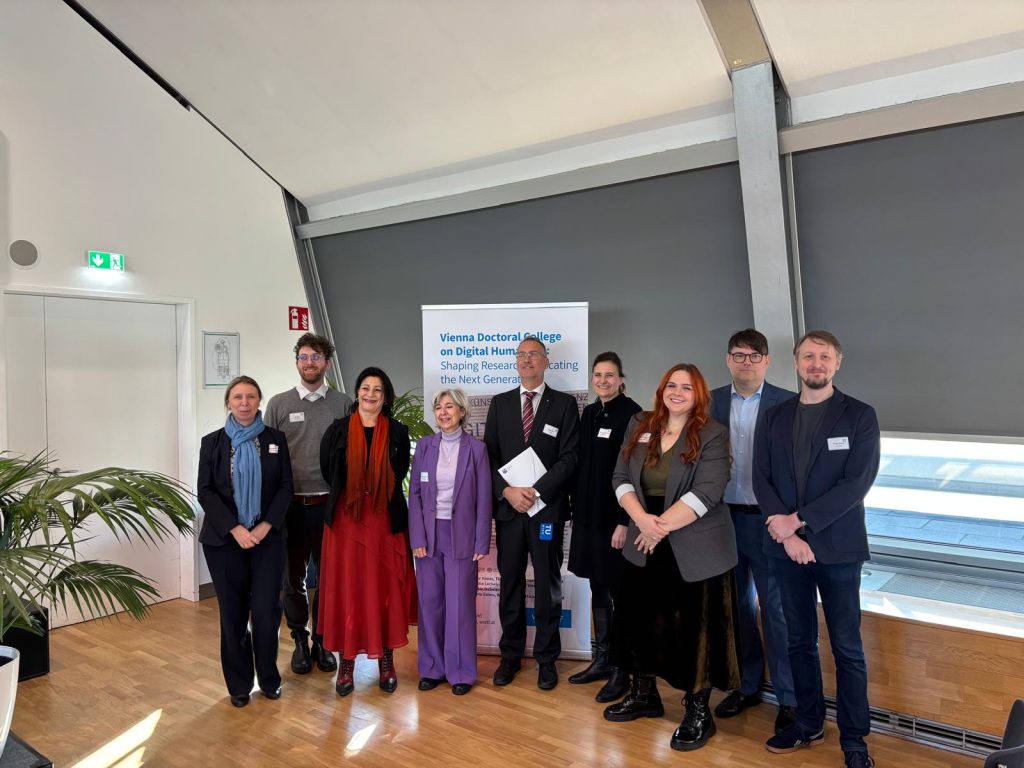
Colourful kick-off event at the Vienna Urania: about the complex interplay between technology and society
The kick-off event offered exciting insights into the strategy and implementation of digital humanism in the City of Vienna. In her welcoming address, Veronica Kaup-Hasler, City Councillor for Culture and Science, emphasised the importance of combining theory and practice in a way that puts people at the centre. Michael Strassnig, Deputy Managing Director WWTF, gave an overview of the various activities of the City of Vienna in the field of digital humanism.
The three vice-rectors of the participating universities – Peter Ertl (TU Wien), Manuela Baccarini (University of Vienna/Uni Wien) and Bernadette Kamleitner (Vienna University of Economics and Business/WU Wien) – underlined the importance of a joint, interdisciplinary approach. Technology and its development are never neutral, but also influenced by social and economic perspectives.
Interdisciplinary research in practice: Will technology serve humanity – or will humanity adapt to serve technology? A central focus of the doctoral programme is the introduction to interdisciplinary methodology. The three scientific programme coordinators Peter Knees (TU Wien, UNESCO Chair on Digital Humanism), Sophie Lecheler (Uni Wien) Marta Sabou and Jan Maly (WU Wien) explained how different scientific perspectives and methods are combined in the doctoral programme.
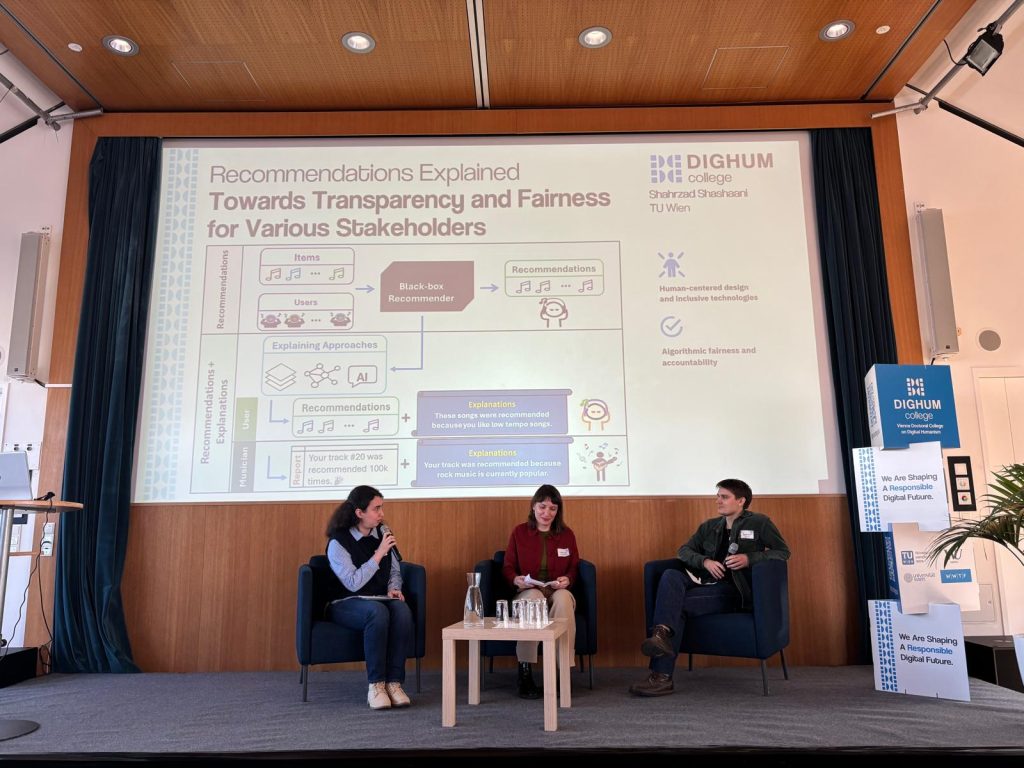
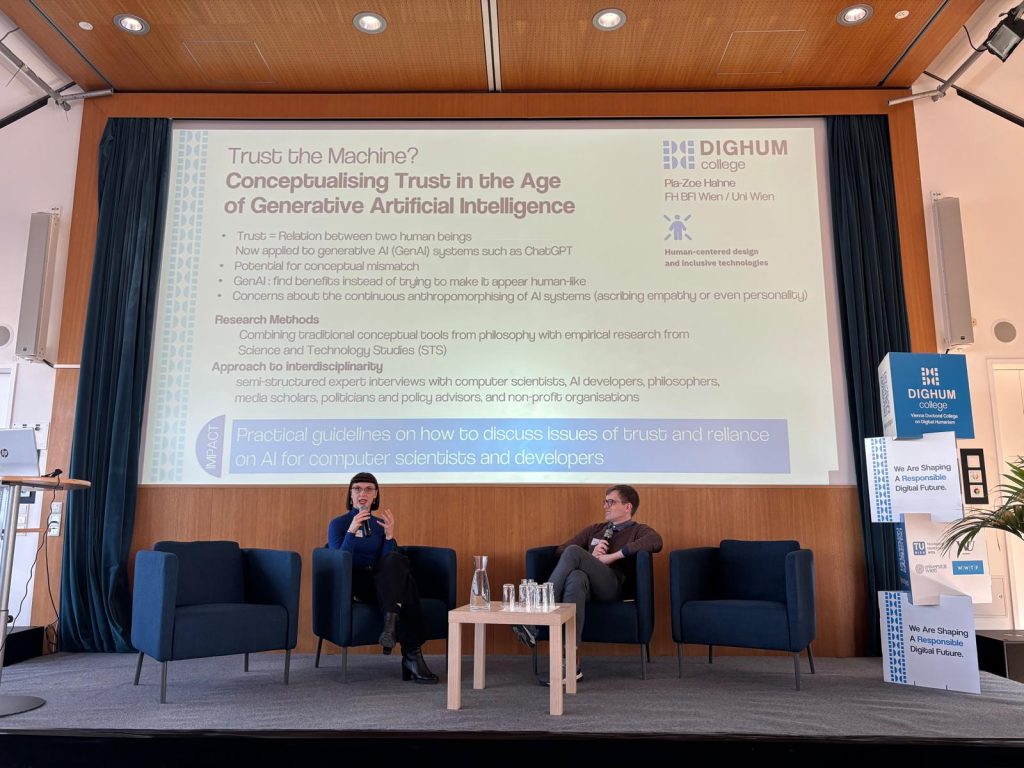
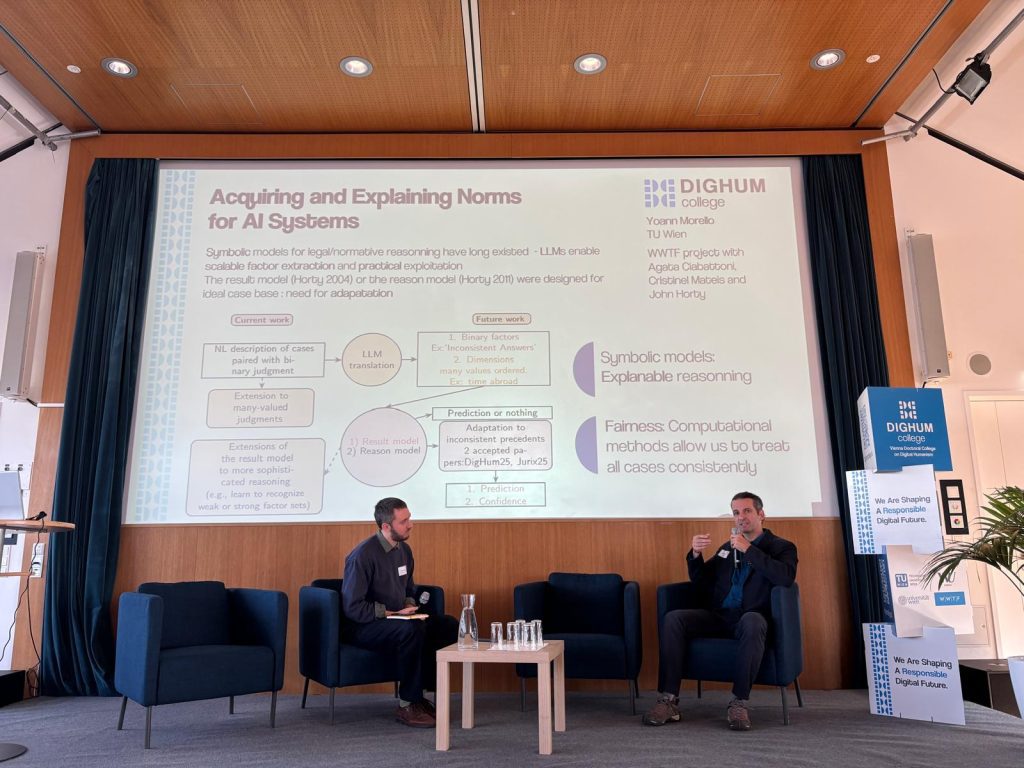
The PhD projects were presented in peer-to-peer interviews with questions around methods, frameworks and potential impact on a societal, technological and economical level.
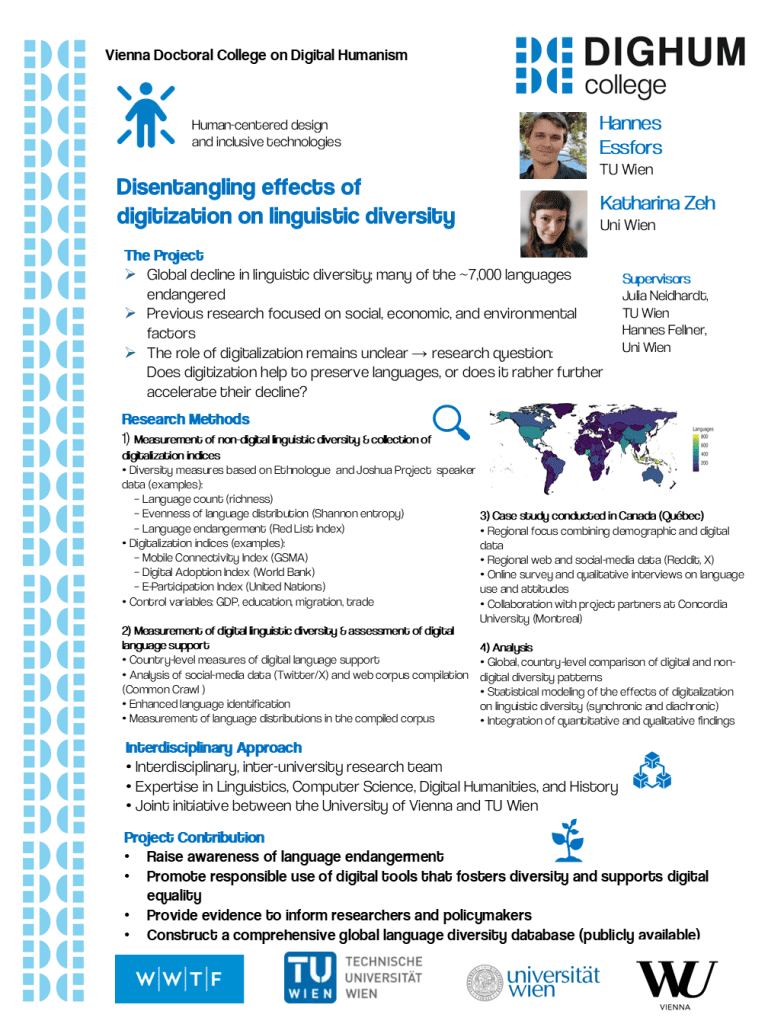
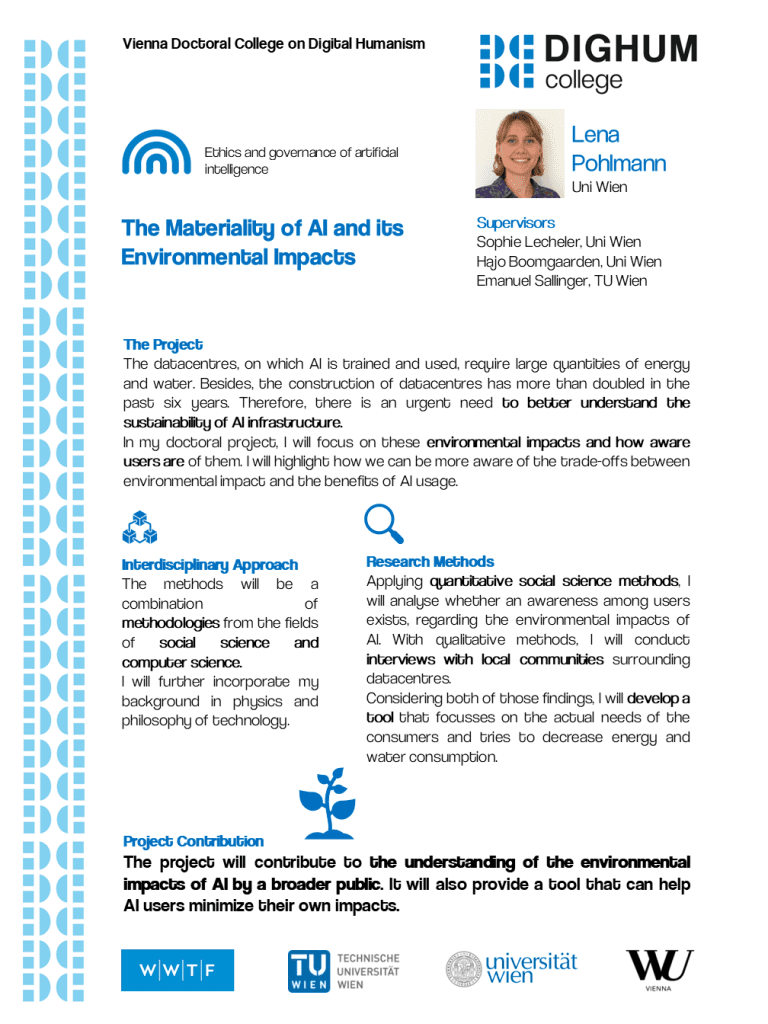
The project posters facilitate discussions and explain questions:
Katharina Zeh (Uni Wien), Hannes Essfort (TU Wien)
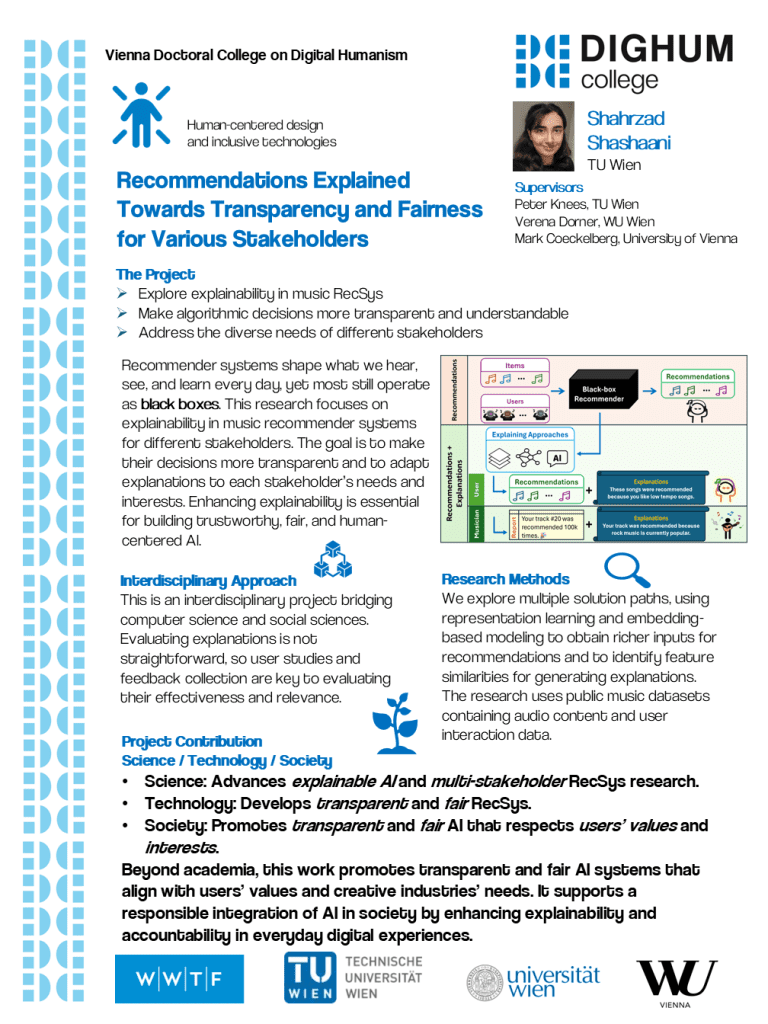
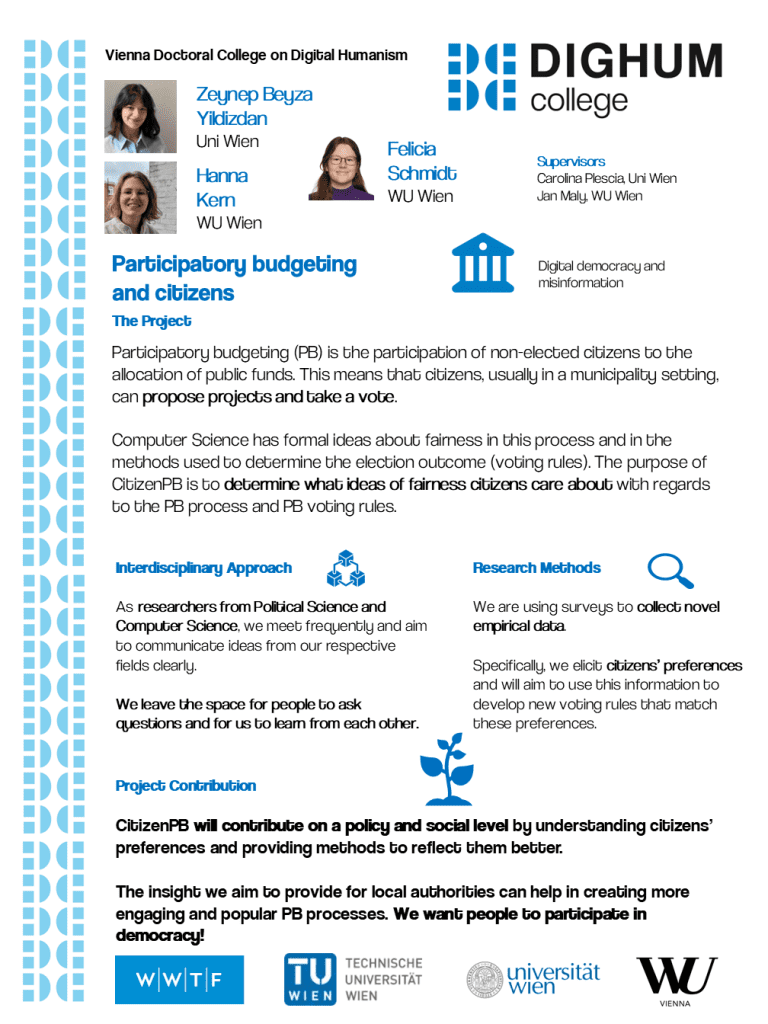
Felicia Schmidt (WU Wien), Hanna Kern, Zeynep Yildizdan (Uni Wien)
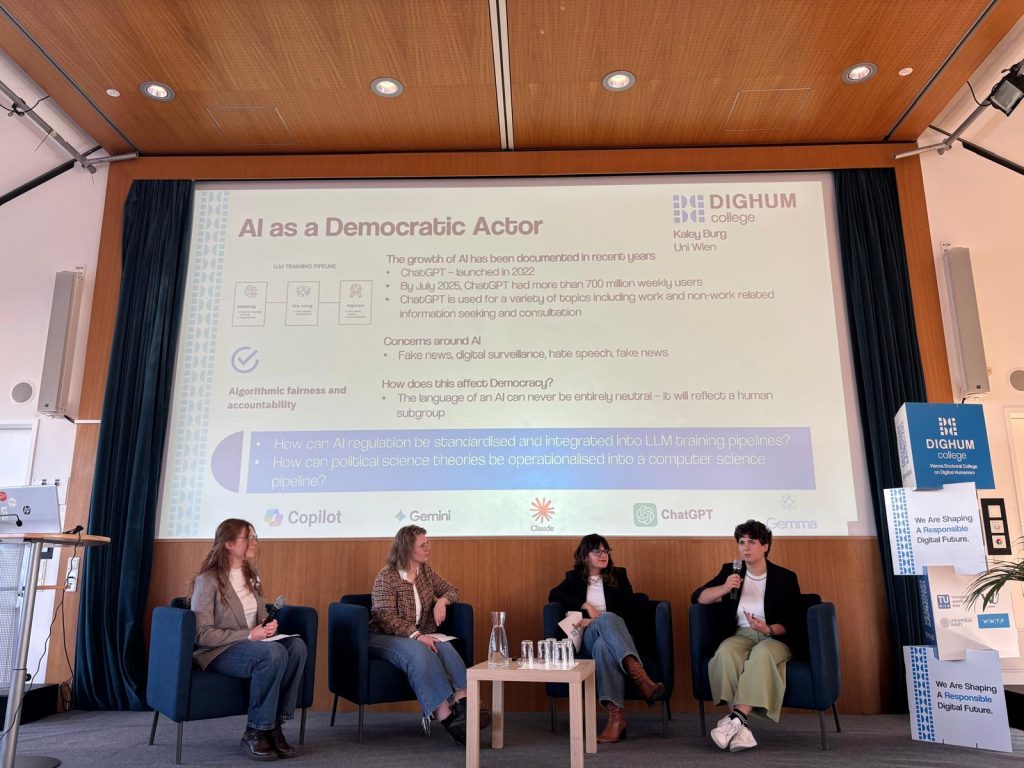
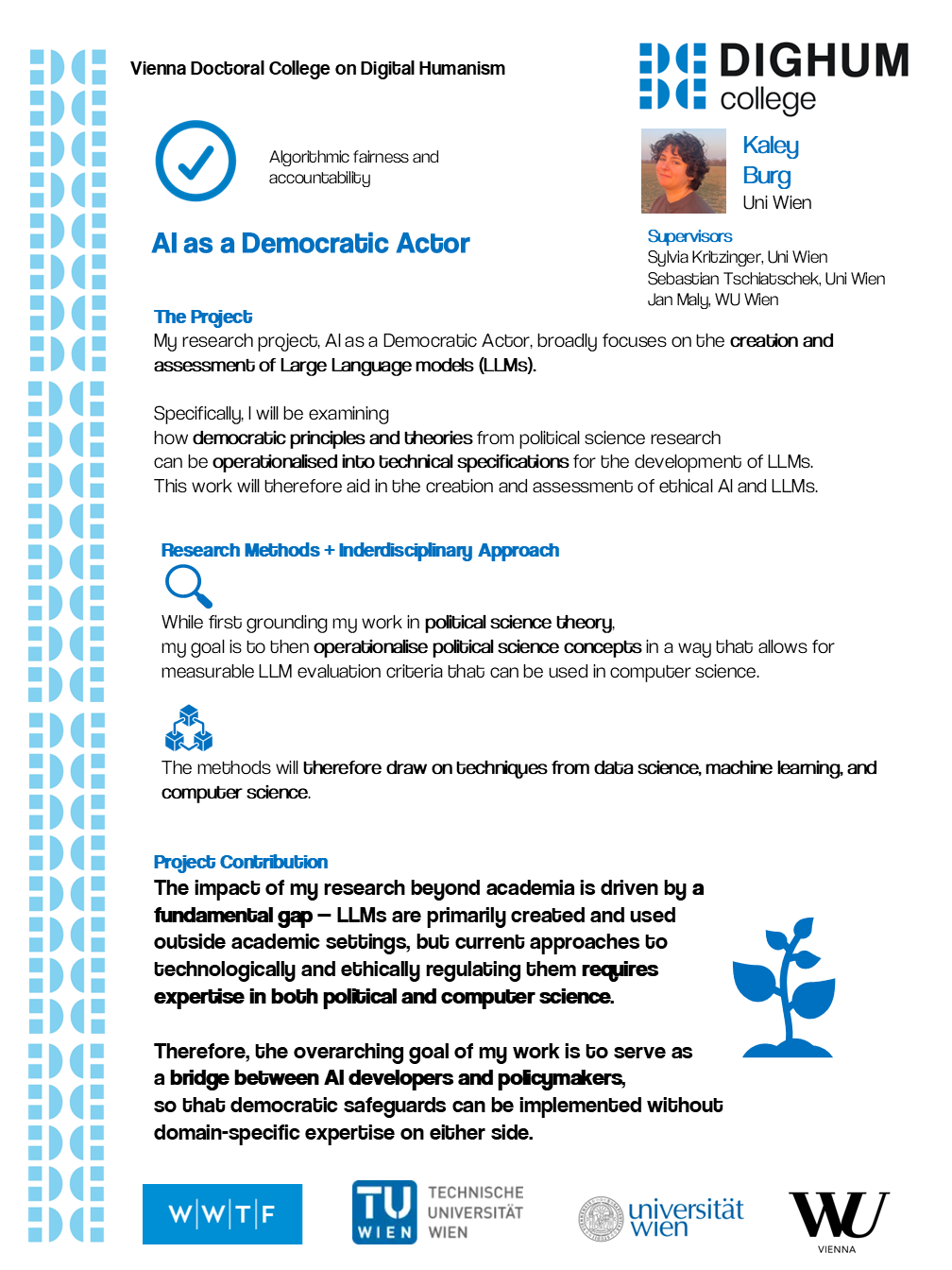
Kaley Burg (Uni Wien)
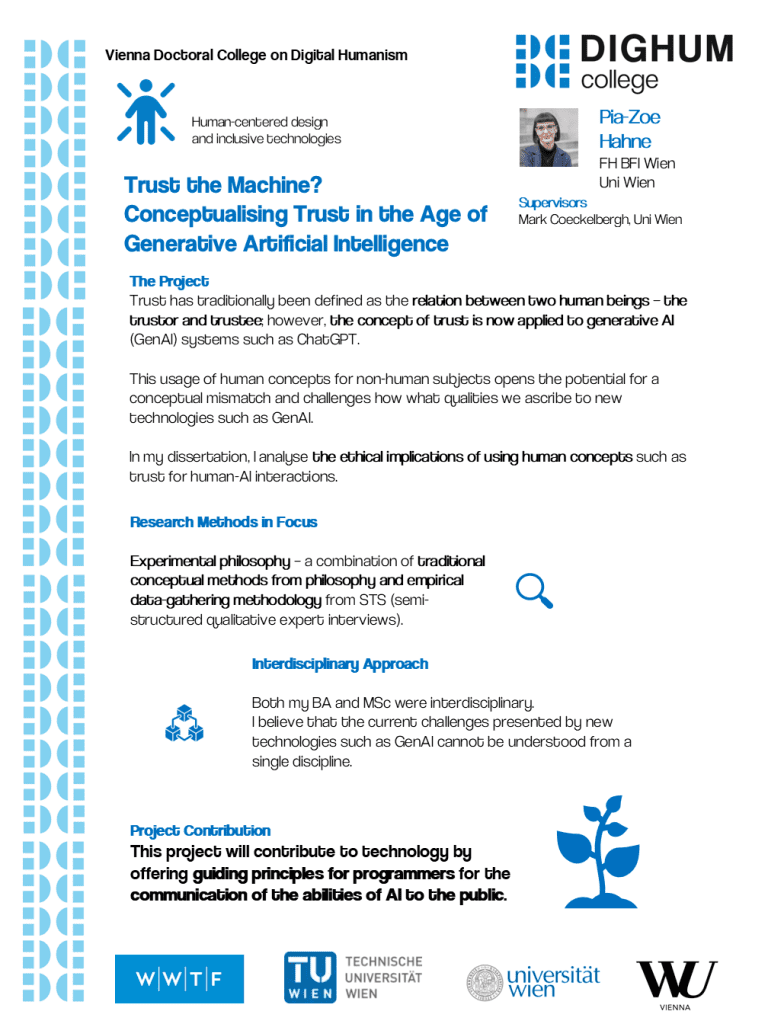
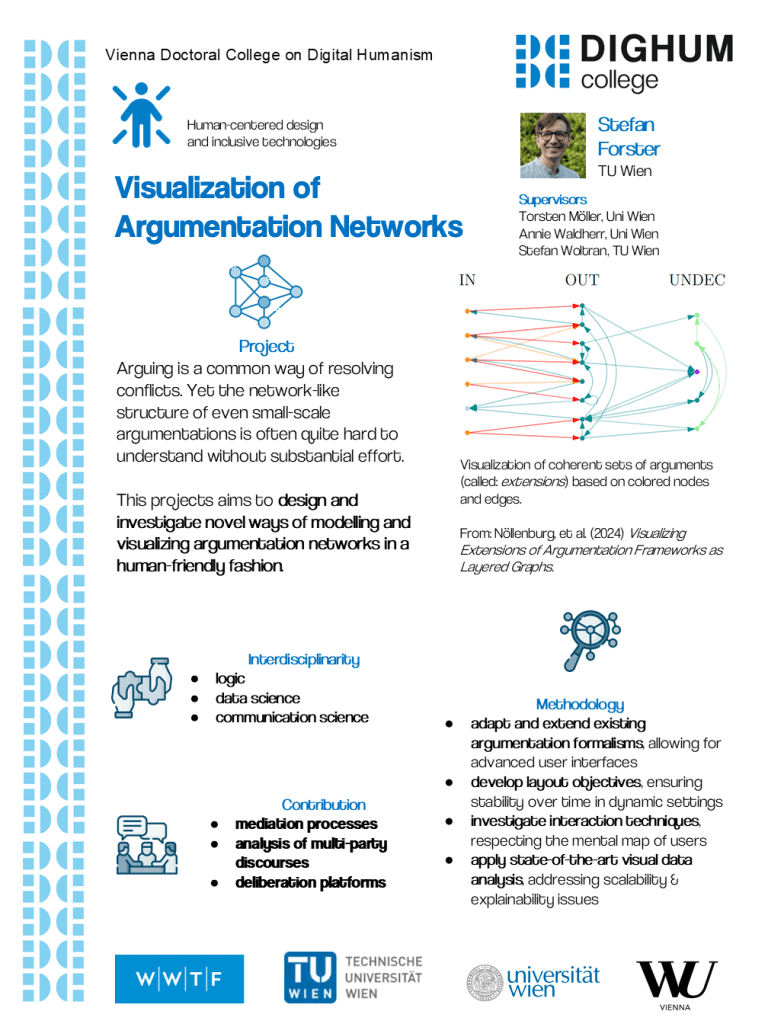
Stefan Forster (TU Wien)
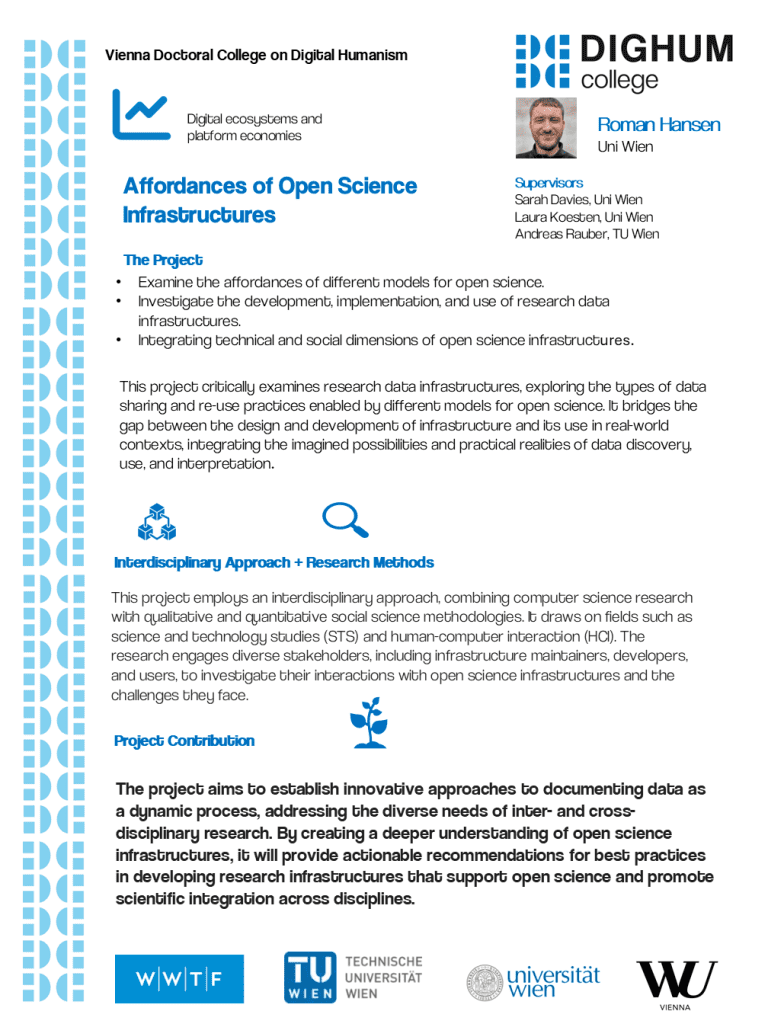
Roman Hansen (Uni Wien)
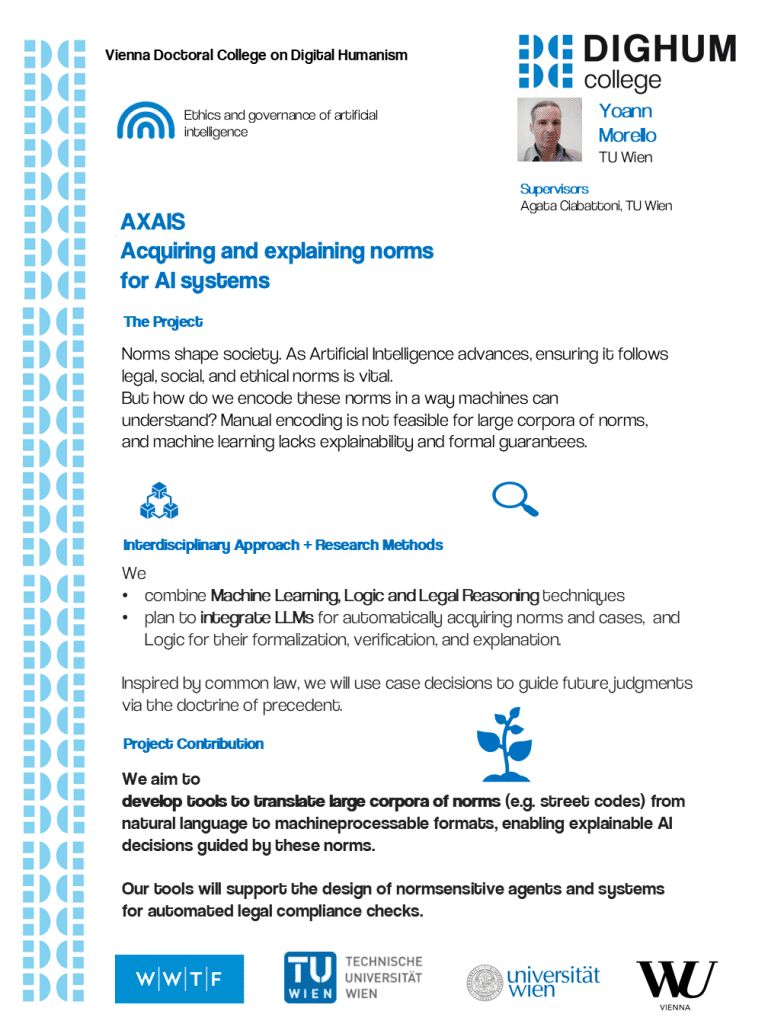
Yoann Morello (TU Wien)
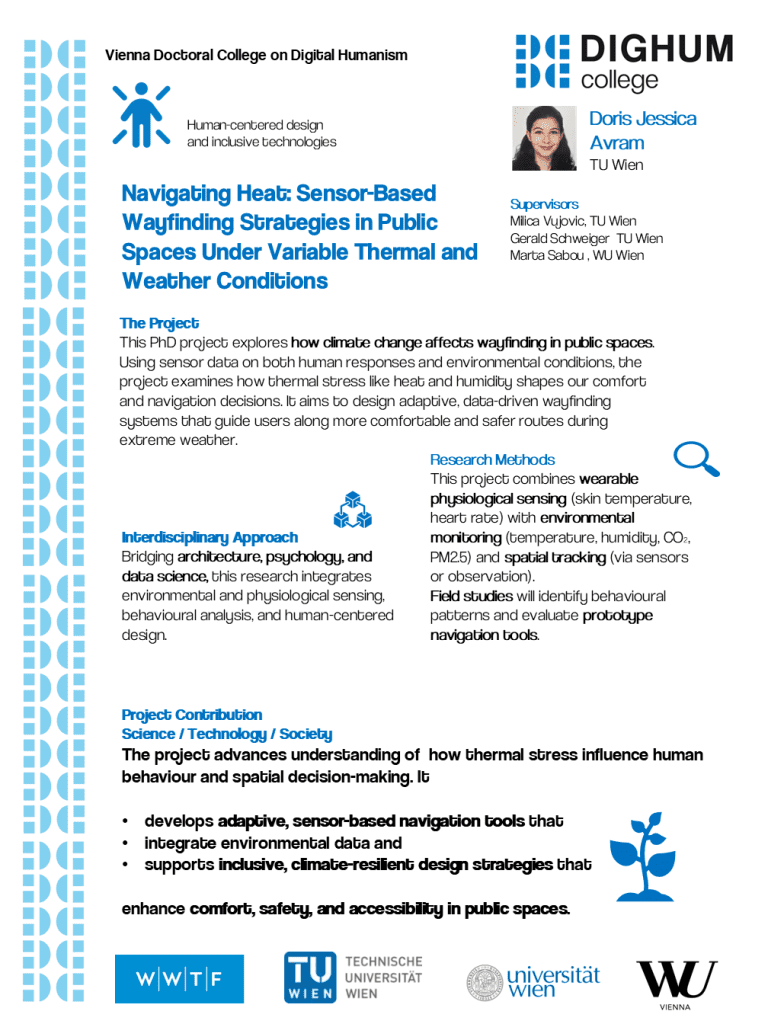
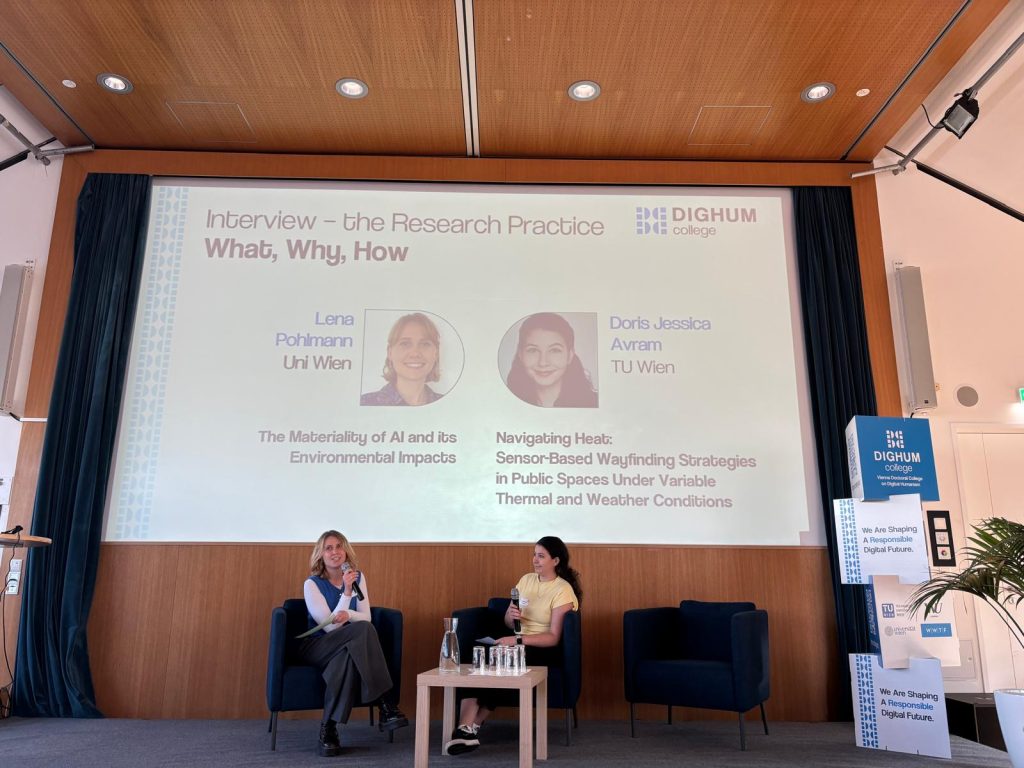
Doris Jessica Avram (TU Wien)
Critical and creative minds to lead the conversation: the concluding keynote by Katja Mayer
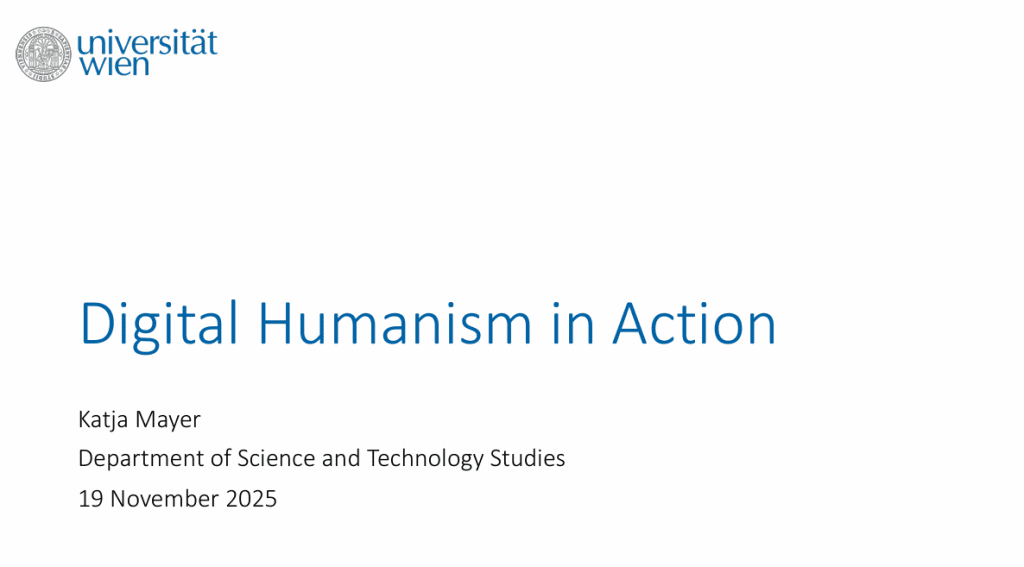
The keynote speech by Katja Mayer (University of Vienna) directly reflected on the students’ projects. It concluded this inspiring day and show a Digital Humanism in practice that:
treats interdisciplinarity as a collaborative journey rather than a checkbox.
asks difficult questions about norms, fairness, participation, and power
recognizes the materiality and ecological footprint of digital systems
values diversity not as decoration but as constitutive of democratic life and scientific knowledge production.
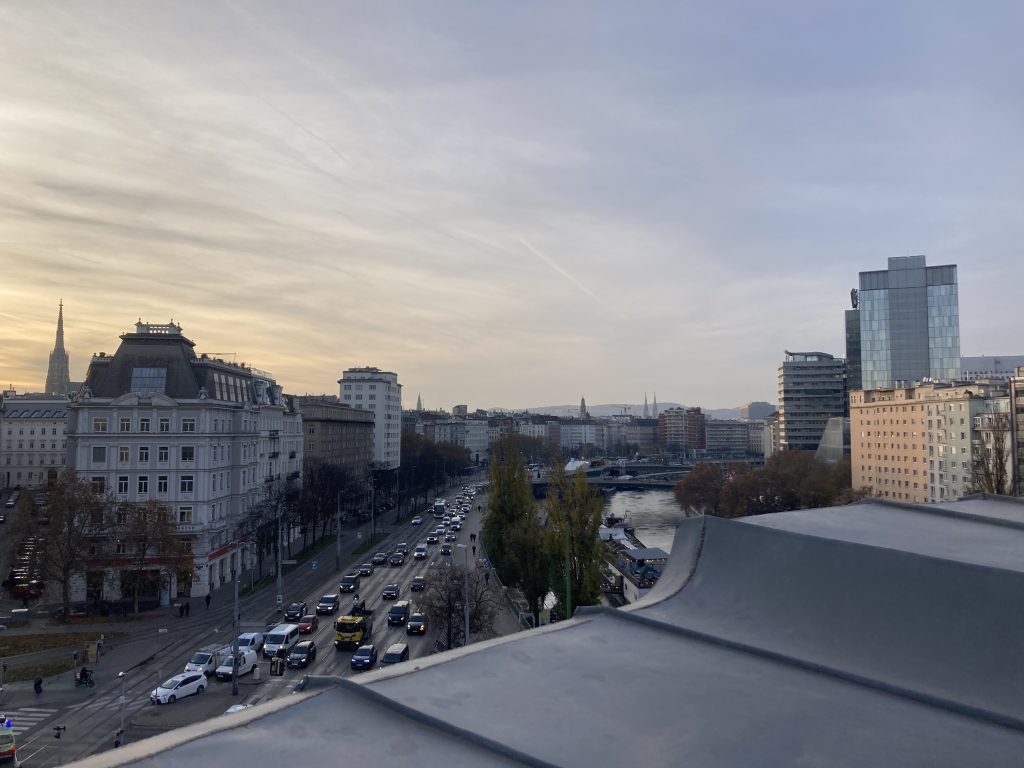

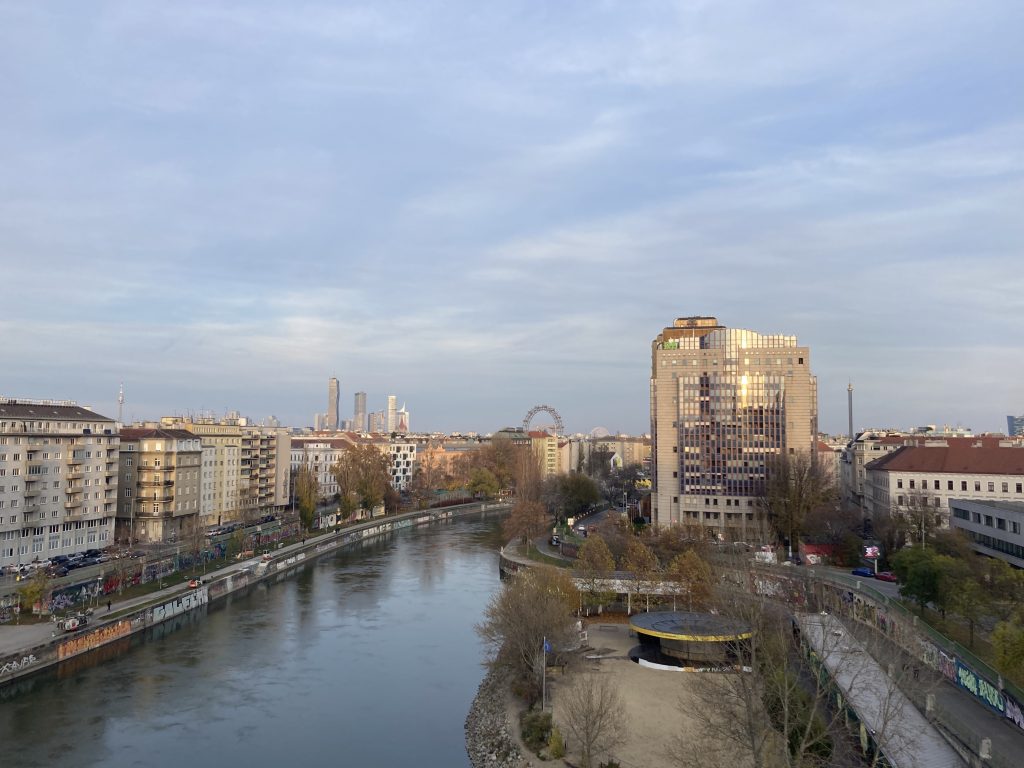
View from the Dachsaal of Urania Sternwarte, Pic Courtesy Petra Steinkogler