
Author: Salomé Wagner
From Epistemic Frameworks to PhD Practice
Kick-off 2025 Review: Digital Humanism in Action at the Vienna Doctoral College
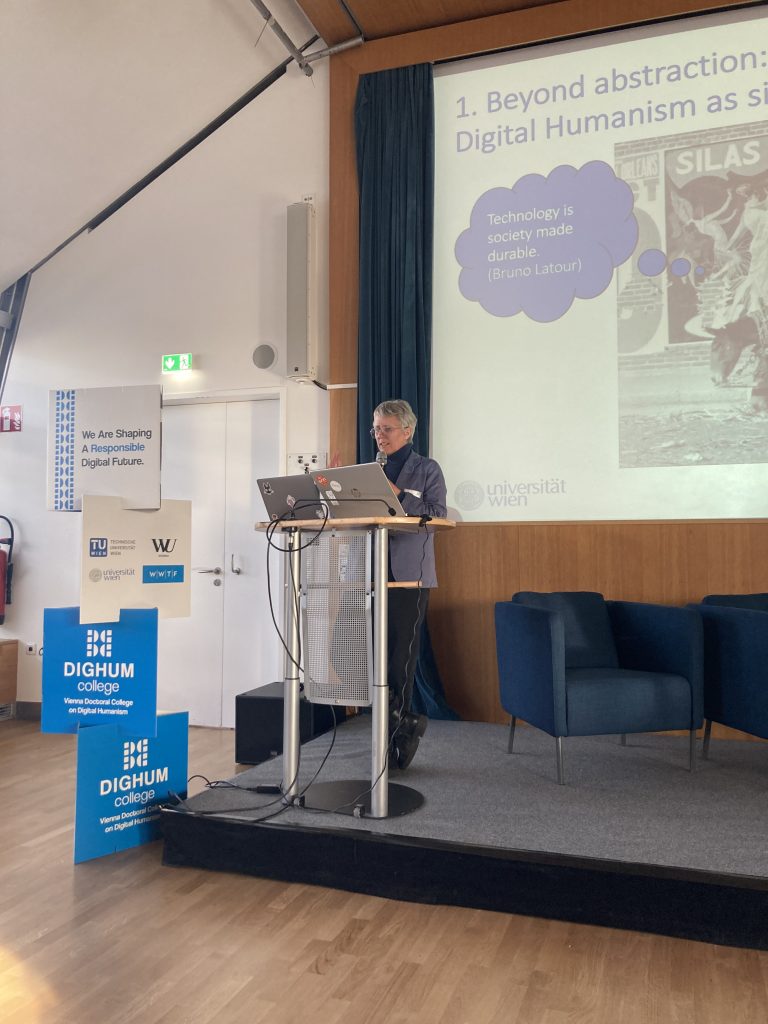
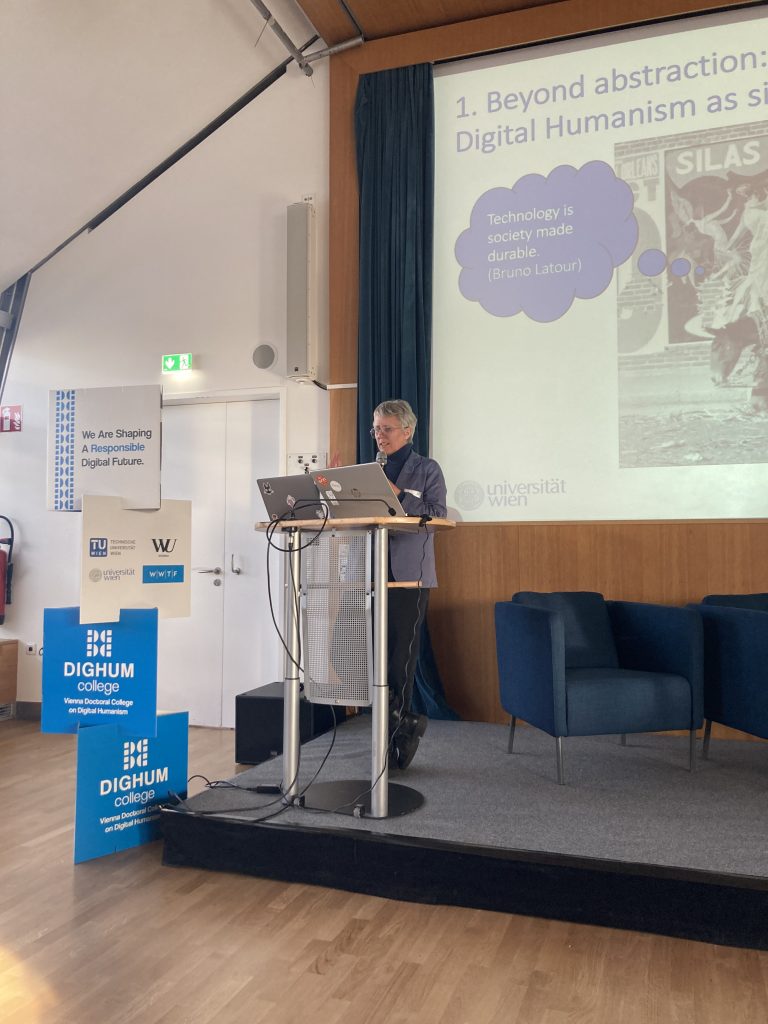
The Keynote by Dr Katja Mayer, reflecting our PhD Projects
In her keynote “Digital Humanism in Action”, Katja Mayer frames Digital Humanism not as a fixed doctrine but as a situated, critical, and interdisciplinary practice. The Vienna Doctoral College on Digital Humanism translates this perspective into concrete research through its PhD projects, which collectively demonstrate how digital humanism becomes real through design choices, research methods, and societal engagement.
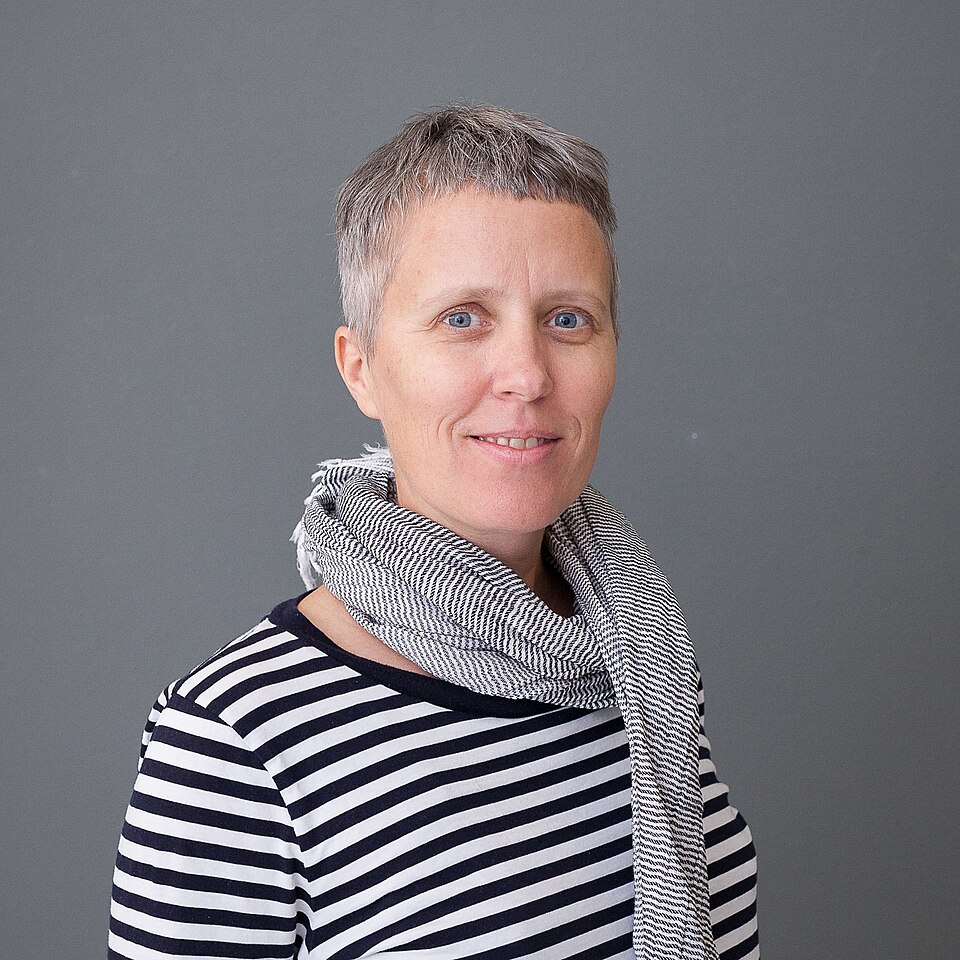
“Taken together, the PhD projects of the Vienna Doctoral College demonstrate that Digital Humanism is not merely a normative label. It is a research practice that asks difficult questions about power, materiality, and responsibility; that values diversity as constitutive of knowledge; and that understands interdisciplinarity as a collaborative journey. In this sense, the doctoral college does not just teach Digital Humanism – it enacts it.”
Dr Katja Mayer, University of Vienna, Member of the DigHum College Advisory Board
A central argument of her keynote is that technology is “society made durable” (Bruno Latour) and that digital systems must be made knowable through unpacking, translation, and sharing. This is directly reflected in projects focusing on explainability, transparency, and trust. For example, research on explainable recommender systems and the visualization of argumentation networks seeks to open algorithmic black boxes, enabling users and stakeholders to understand, question, and contest automated decisions. These projects embody Digital Humanism’s commitment to epistemic accessibility and democratic accountability.
The theme of democracy, fairness, and the politics of design appears in projects on AI as a democratic actor, participatory budgeting, and norm-sensitive AI systems. These projects bridge political theory, legal reasoning, and computer science, operationalising democratic values into technical specifications and decision-making processes. In doing so, they move beyond ethics as an afterthought and treat it as an integral design principle.
Another key dimension is socio-materiality and planetary limits. This perspective is mirrored in projects addressing the environmental impacts of AI infrastructure and climate-adaptive digital systems. Research on the materiality of AI data centres foregrounds energy, water use, and ecological trade-offs, while sensor-based wayfinding under extreme heat conditions connects digital systems to embodied human experience and climate resilience. These projects reflect a Digital Humanism that acknowledges the physical, environmental, and infrastructural conditions underlying digital technologies.
Mayer’s emphasis on diversity, inclusion, and situated knowledge is echoed in projects on linguistic diversity, trust in generative AI, and open science infrastructures. Investigations into how digitization affects endangered languages challenge assumptions of technological neutrality and highlight uneven cultural impacts. Similarly, work on open science infrastructures examines whose knowledge is documented, shared, and reused, and under what conditions—aligning closely with feminist epistemology and STS traditions discussed in the keynote.
Finally, the Vienna Doctoral College exemplifies inter-, pluri-, and transdisciplinarity beyond rhetoric. Every PhD project is co-supervised across institutions and disciplines, combining methods from computer science, social sciences, humanities, law, and design. Persistent frictions—between quantitative and qualitative methods, formal models and lived experience—are treated not as obstacles but as productive spaces for knowledge generation, precisely as envisioned in Mayer’s account of Digital Humanism in action.
The conclusion of the inspiring kick-off showed a Digital Humanism in practice that:
values diversity not as decoration but as constitutive of democratic life and scientific knowledge production.
treats interdisciplinarity as a collaborative journey rather than a checkbox.
asks difficult questions about norms, fairness, participation, and power
recognizes the materiality and ecological footprint of digital systems
About Dr Katja Mayer
Dr Katja Mayer is member of the advisory board of the Vienna Doctoral College on Digital Humanism and Senior Scientist at the Centre for Social Innovation ZSI and a sociologist at the STS department of the University of Vienna. She works at the intersection of science, technology, and society. Since 2019, she has focused on the politics of open science and open data in the context of computational social sciences and AI. Dr Mayer has served as the PI for international research projects and as a rapporteur for the European Commission’s Open Science MLE in 2018. She has contributed extensively to policy advice and promoting open science, citizen science, and open digital research infrastructures. Her practical experience from prior work in the IT industry and her former role as a research advisor to the President of the European Research Council ERC have enriched her transdisciplinary approach. Additionally, she has mentored and trained individuals in open research practices and has taught STS, citizen science and critical data studies at TU Munich and the University of Lucerne, among others.