
Author: Salomé Wagner
“Digital Humanism and Digital Ethics in Practice: Local Authorities and Public Services.”
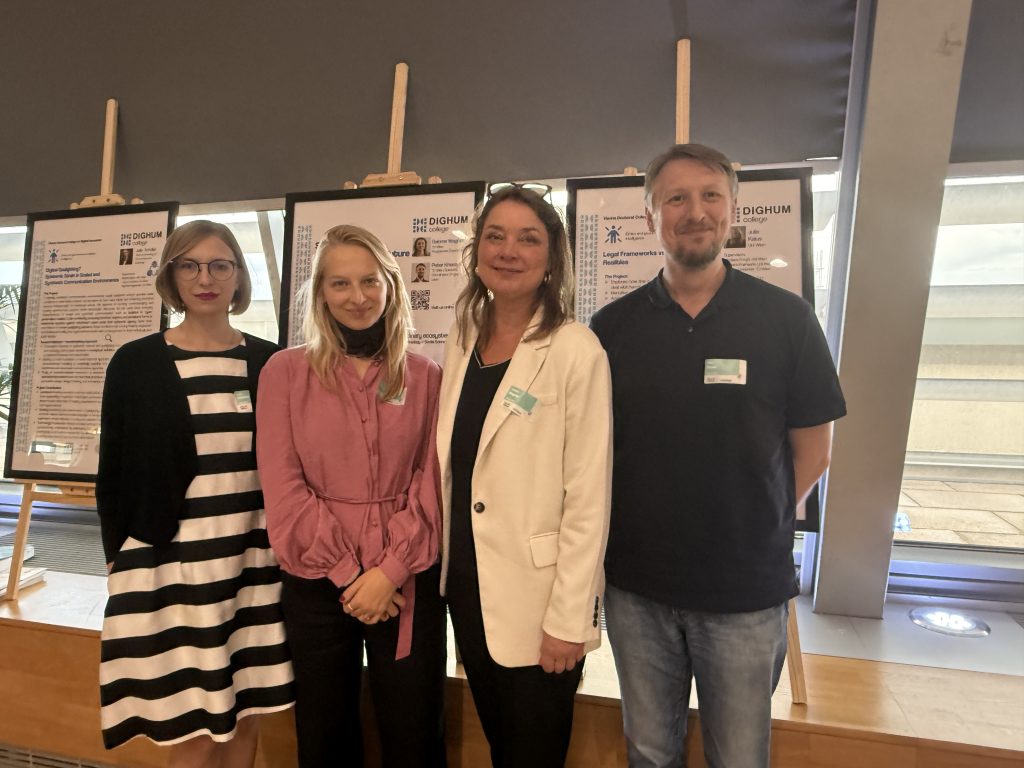
Presenting @ the European Cities Conference, 14-15 September 2026, Vienna
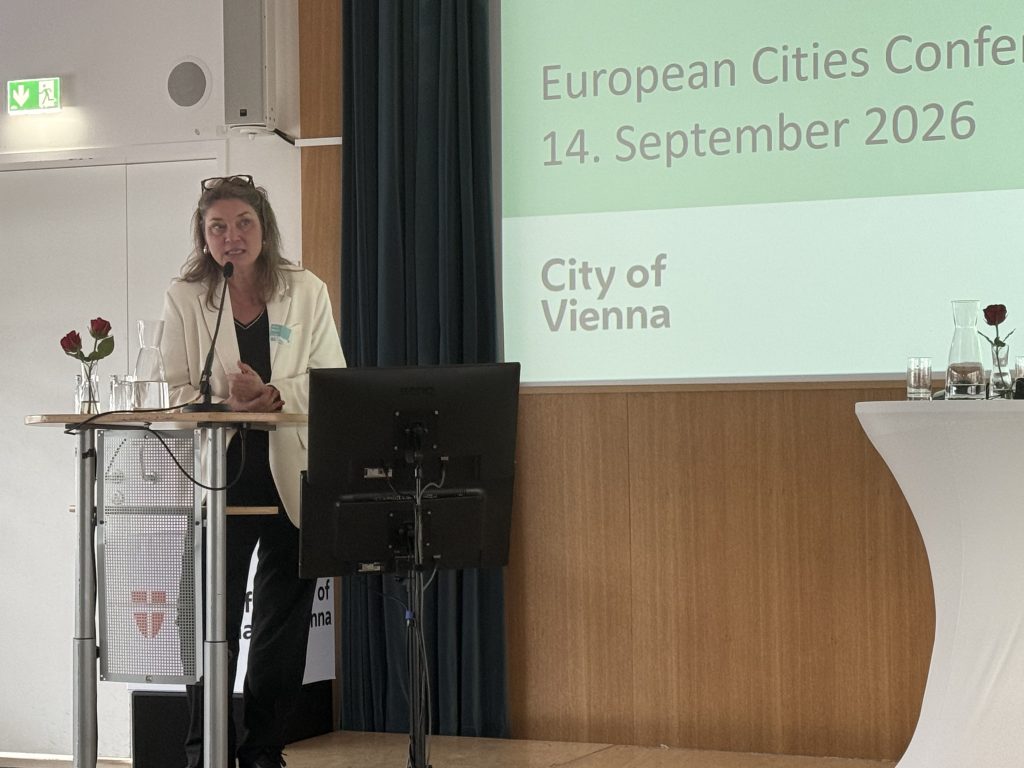
Last week, the Vienna Doctoral College on Digital Humanism had the opportunity to present its work at the European Cities Conference “Digital Humanism and Digital Ethics in Practice: Local Authorities and Public Services.”
The well attended conference, organized and hosted by the City of Vienna – International Offices, provided an inspiring setting to discuss how Digital Humanism moves into practice of local authorities and public services and how current projects in cities like Berlin, Warsaw, Munich, Ljubljana and Sarajevo shape this environment.
We got invited to present our Doctoral College to this audience with a programme overview and 2 PhD projects to demonstrate our contribution to this important development. But first, we started with a first introduction to the Center of Digital Humanism Vienna.
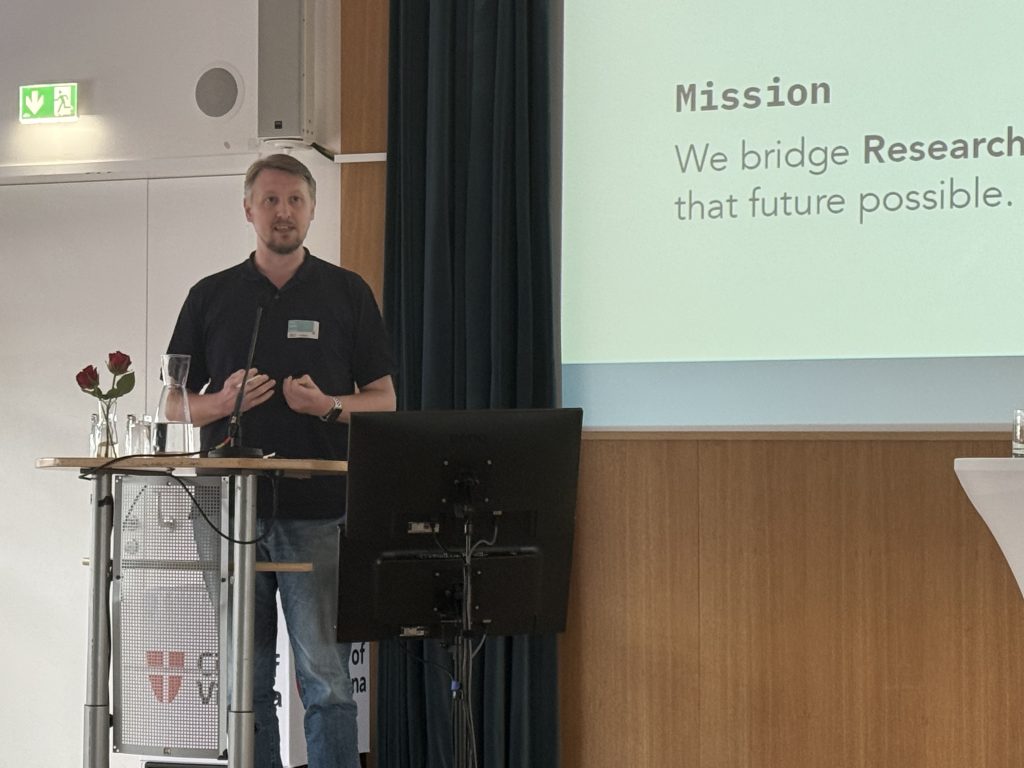
About the newly founded Center for Digital Humanism Vienna
🎓 Peter Knees, in July appointed Scientific Director of the newly founded Center for Digital Humanism Vienna.
He talked about the vision on how to establish Vienna as leading Hub for Digital Humanism, and how to contribute to a digital future, that puts people, democracy and society first. By bridging research, innovation and society, this future will come into life.
About the development path of our Doctoral College
🔎 Salome Wagner, Programme Coordinator of the Doctoral College, presented the development of the programme and its interdisciplinary ecosystem. The College brings together researchers from different fields, with research spanning topics including artificial intelligence, human oversight, technology monopolies, regulation, democracy, inclusion and participation, media, privacy and sustainability.
About Digital Gaslighting
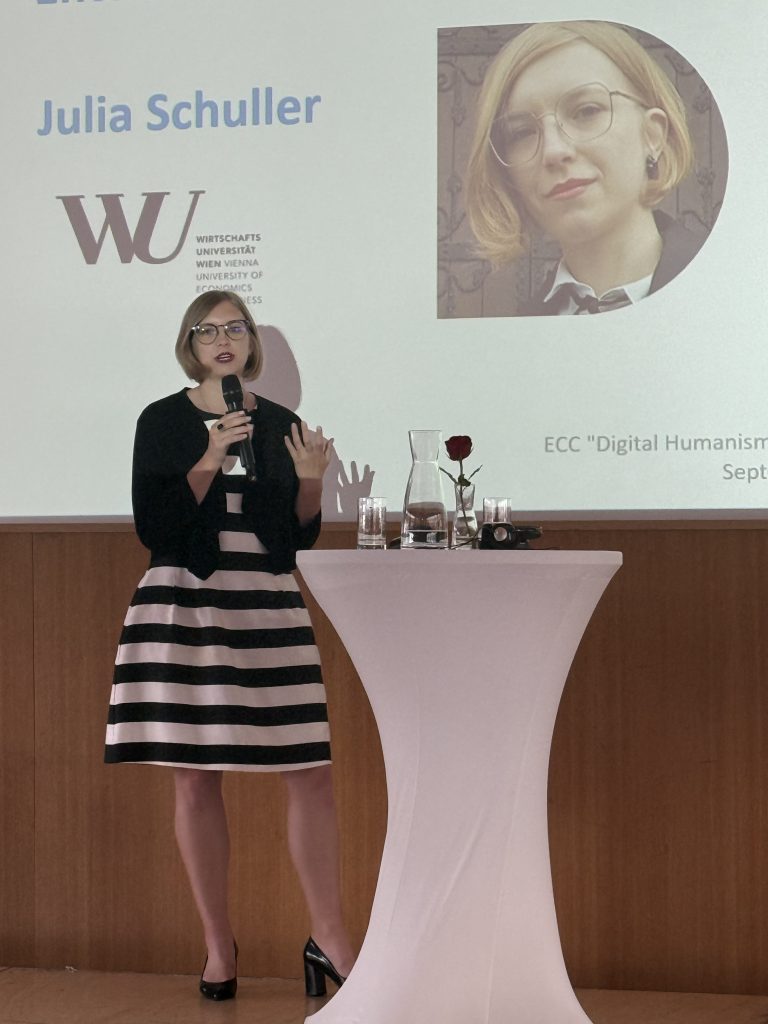
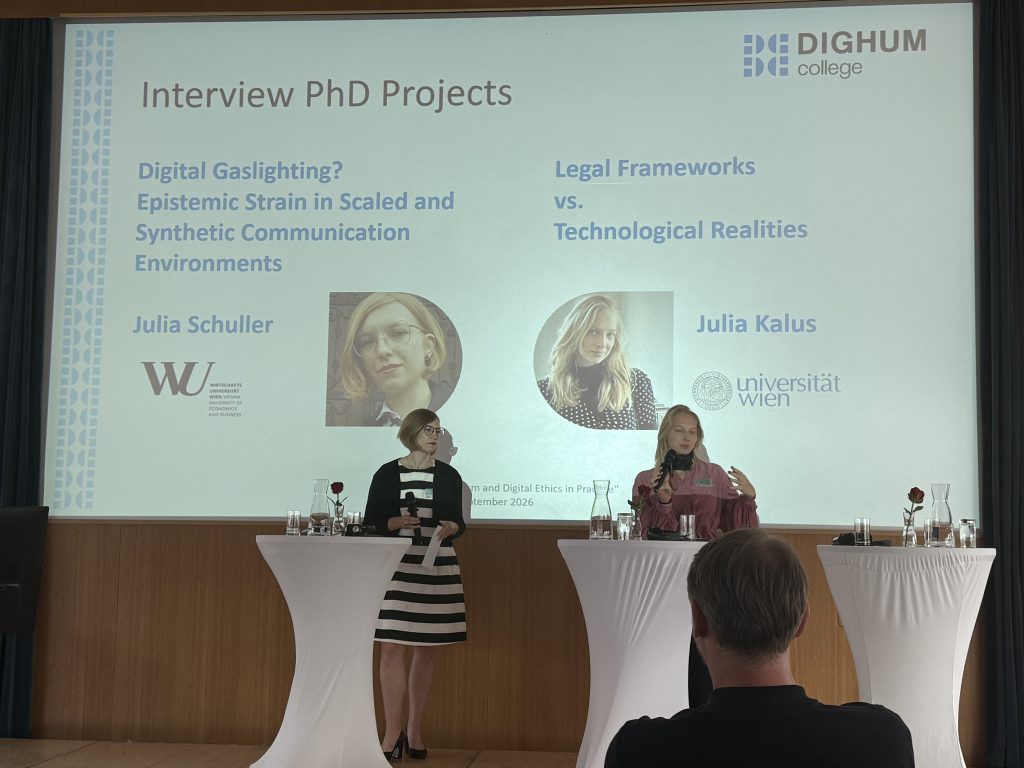
🧠 Julia Schuller, PhD Candidate at the Doctoral College, presented her research project “Digital Gaslighting? Epistemic Strain in Scaled and Synthetic Communication Environments.” Her research explores how hyper-personalised realities, confidently incorrect AI outputs and persistent forms of testimonial injustice can place new pressures on people’s epistemic agency — and how these dynamics may affect individuals and democratic discourse.
About Legal Frameworks vs. Technologial Realities
⚖️ Julia Kalus, PhD Candidate at the Doctoral College, presented her research on “Legal Frameworks vs. Technological Realities,” highlighting another important dimension of Digital Humanism: understanding and negotiating the relationship between rapidly evolving technologies and the legal frameworks intended to govern them.
What connects these perspectives is the conviction that digital transformation is also a social, political, legal and human process that requires interdisciplinary research and dialogue.
A big thank you to the organisers of the European Cities Conference for creating a space where public-sector practice and questions about our digital future could meet — and to everyone who contributed to the discussions.
Together, we are shaping a responsible digital future.