
Author: Salomé Wagner
‘AI Transformation Space’: Lasting impressions from WISH 2026
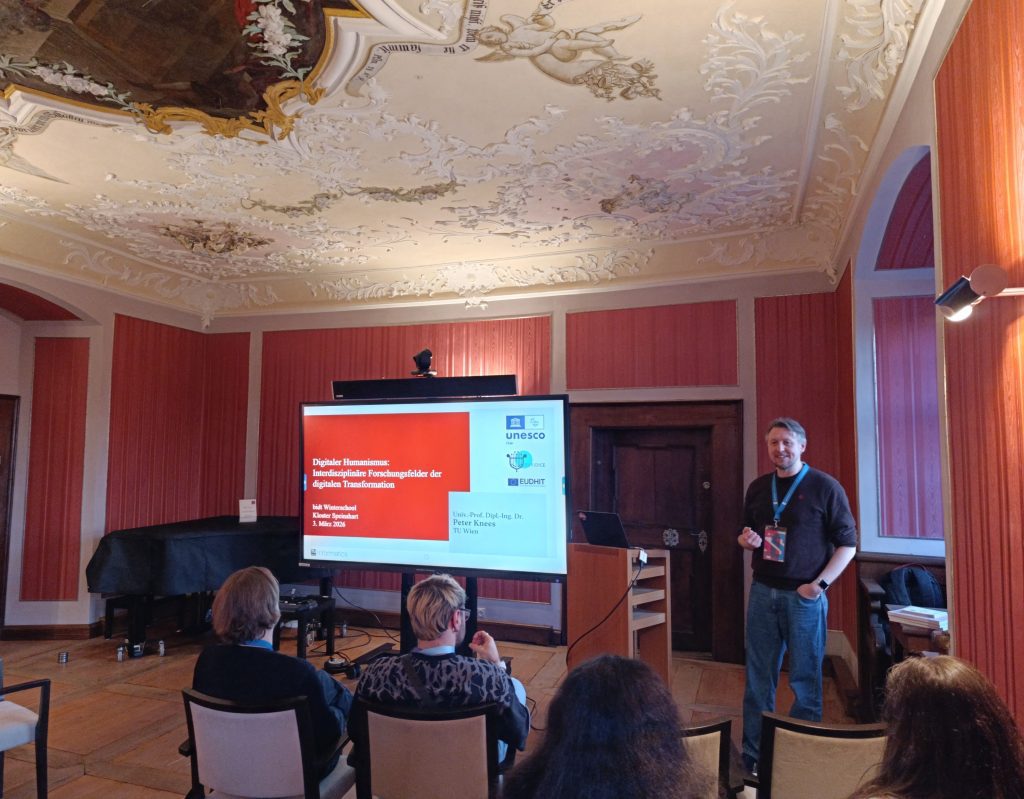
AI, a cultural force that is changing the way we produce and think.
Artificial intelligence is changing the way we work and, with it, cultural creativity. This is also changing our understanding of creativity in a wide variety of disciplines. The WISH 2026 winter school, organised by Universität Augsburg and Technische Hochschule, discussed these interactions between technology, society and culture.
The first talk, held by Peter Knees (TU Wien), discussed the concept digital humanism. Digitalisation is much more than technical progress – it is a social task. Algorithms and AI systems now influence decisions in business, the media and everyday life. Therefore, their development must be considered not only from a technological perspective, but also from an ethical, social and political point of view. Digital humanism puts people at the centre: technologies should be designed in such a way that they strengthen democratic values, promote transparency and take social responsibility into account.
Peter Knees emphasised in particular the importance of education and critical reflection. Anyone working with AI should understand how these systems work, what data they use and what distortions can arise.
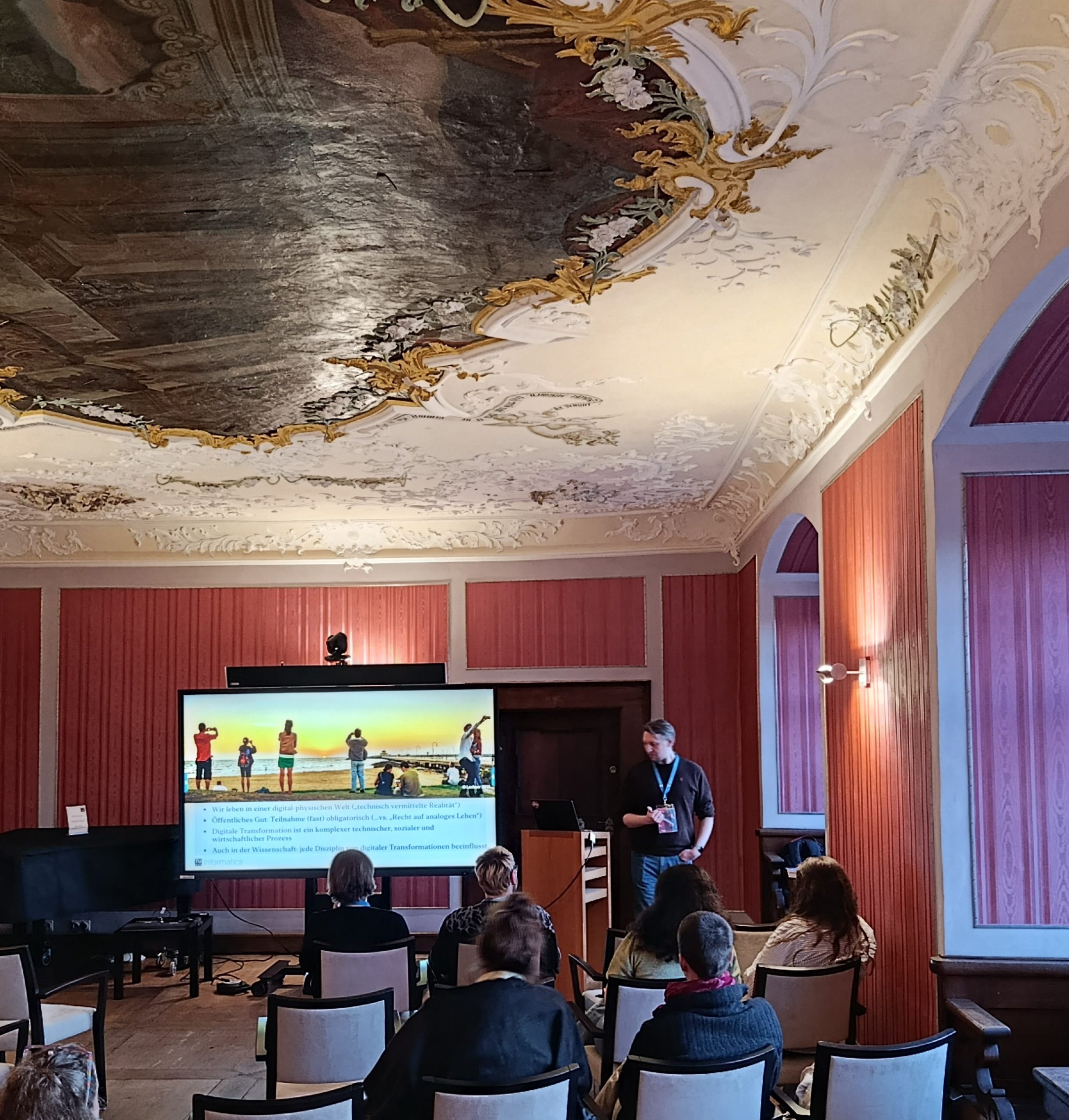
In his talk, Klaus Staudacher (Bavarian Research Institute for Digital Transformation) traced the historical development of humanism from its origins to today’s technology. The postulate that AI can and must never make ethically relevant decisions is the result of this historical review.
The author and theatre director Claudia Hamm discussed new forms of AI-assisted writing, changes in literary translation, and the question of how concepts of authorship and originality are shifting in the age of automated text production.
The exchange between computer science, the humanities and artistic practice shaped the atmosphere of the event. The future of artificial intelligence is not decided solely in data centres and research laboratories. It emerges in the dialogue between technology, society and culture – precisely where digital humanism comes in.
The winter school was organised by Professor Stephanie Waldow (University of Augsburg), Speinshart – Science Centre for AI and SuperTech at Speinshart Monastery, the Bavarian Research Institute for Digital Transformation (bidt), LMU Munich and Augsburg University of Applied Sciences.
Further information
Blog by Klaus Staudacher: https://www.bidt.digital/digitaler-humanismus-was-er-ist-und-was-aus-ihm-folgt/
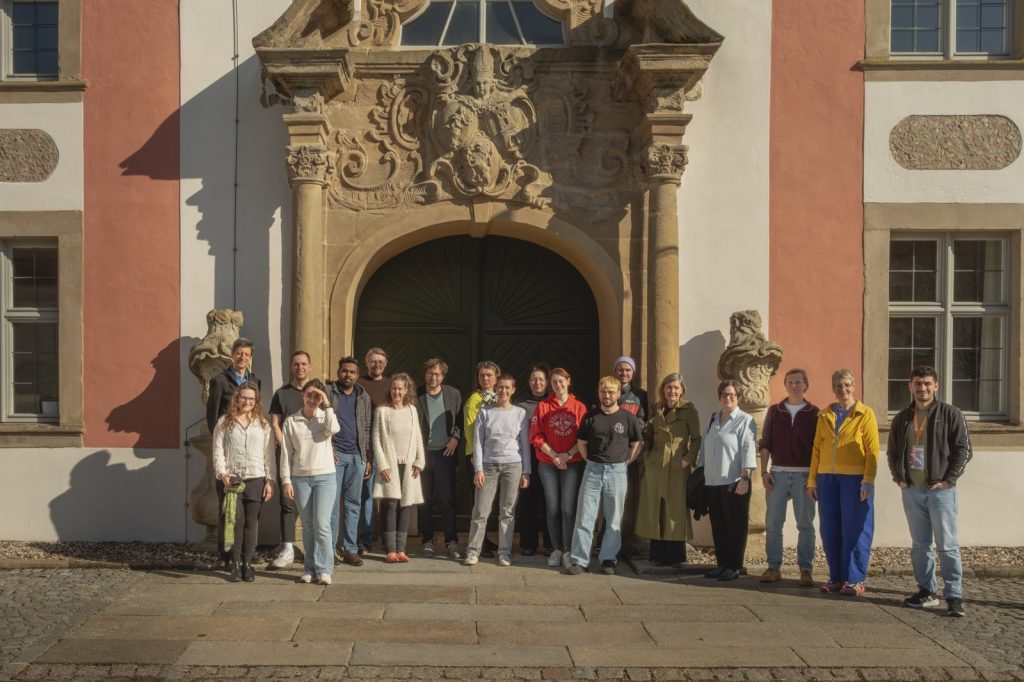
Participants at WISH2026 (March 3-7 2026) Speinshart Scientific Center, Germany