Author: Salomé Wagner
Digital Humanism beyond data governance and platform regulation: When Architecture Becomes the Interface
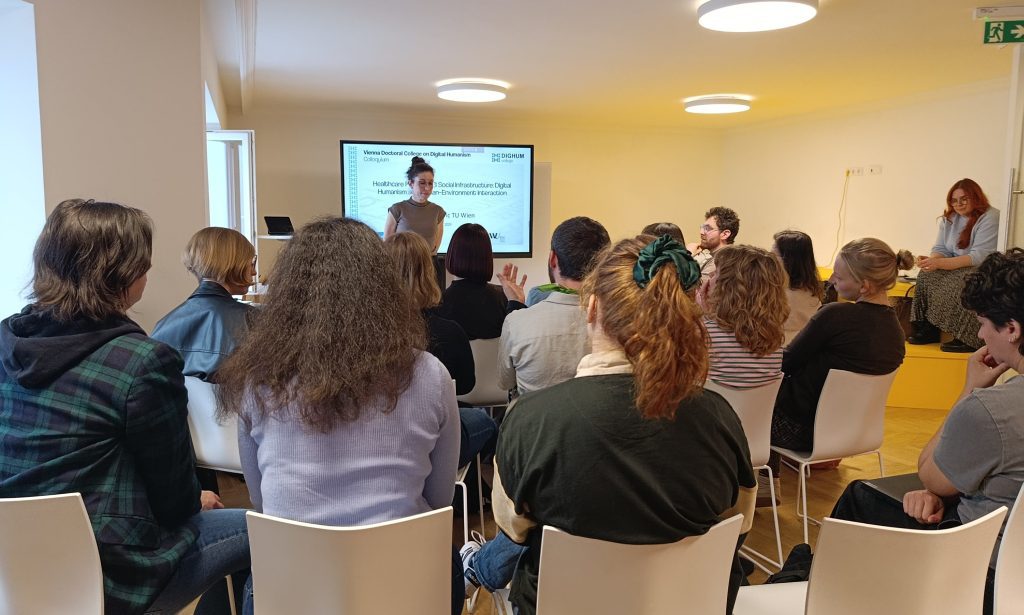
The Vienna Doctoral College on Digital Humanism starts into the Summer Semester 2026 with a Talk by Milica Vujovic, TU Wien
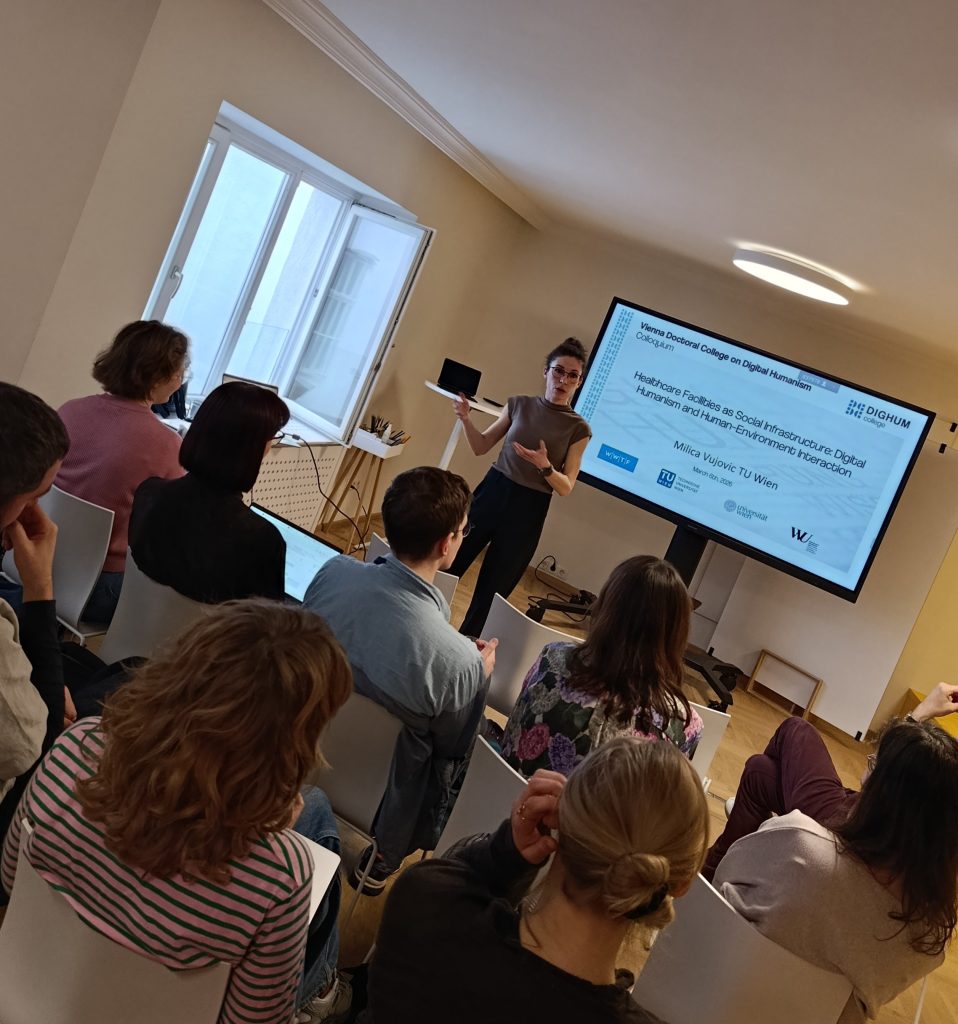
Healthcare facilities are a form of social infrastructure where architecture, human behavior, and digital systems interact to shape wellbeing. The inspiring talk of Milica Vujovic, Associate Professor at Institute of Architectural Sciences, Unit of Digital Architecture and Planning, kicked off the start into our summer semester 2026. The conclusion: in truly human-centered environments, technology should not dominate the experience — it should quietly support it.
The key is that the technology remains non-intrusive and largely invisible, preserving dignity and autonomy for residents.
Similar approaches can be found in newer dementia villages and psychiatric facilities across Northern Europe. Passive sensors, adaptive lighting systems that support circadian rhythms, and intelligent environmental controls allow caregivers to understand patterns of comfort, stress, and activity without turning patients into constantly monitored subjects.
In this sense, digital systems function less as interfaces and more as care infrastructure. They support staff, reduce cognitive load, and allow more time for meaningful human interaction.

“This approach reflects a core principle of Digital Humanism: technology should enhance human agency rather than replace it. Data is used to understand patterns over time, not to control individuals. The design focus remains on dignity, autonomy, and the lived experience of patients.”
Milica Vujovic
For researchers working at the intersection of architecture, technology, and society, this perspective opens an important question:
What if the most human-centered technology is the one we barely notice?
Digital Humanism does not always appear as software or algorithms. Sometimes, it is embedded in the spaces we inhabit — quietly shaping environments that support wellbeing, autonomy, and care.
Starting into the Summer Semester 2026 with the Colloquium and Talk by Milica Vujovic, TU Wien