Author: Salomé Wagner
Shaping the digital future: Presenting our College to the Public at the kick-off
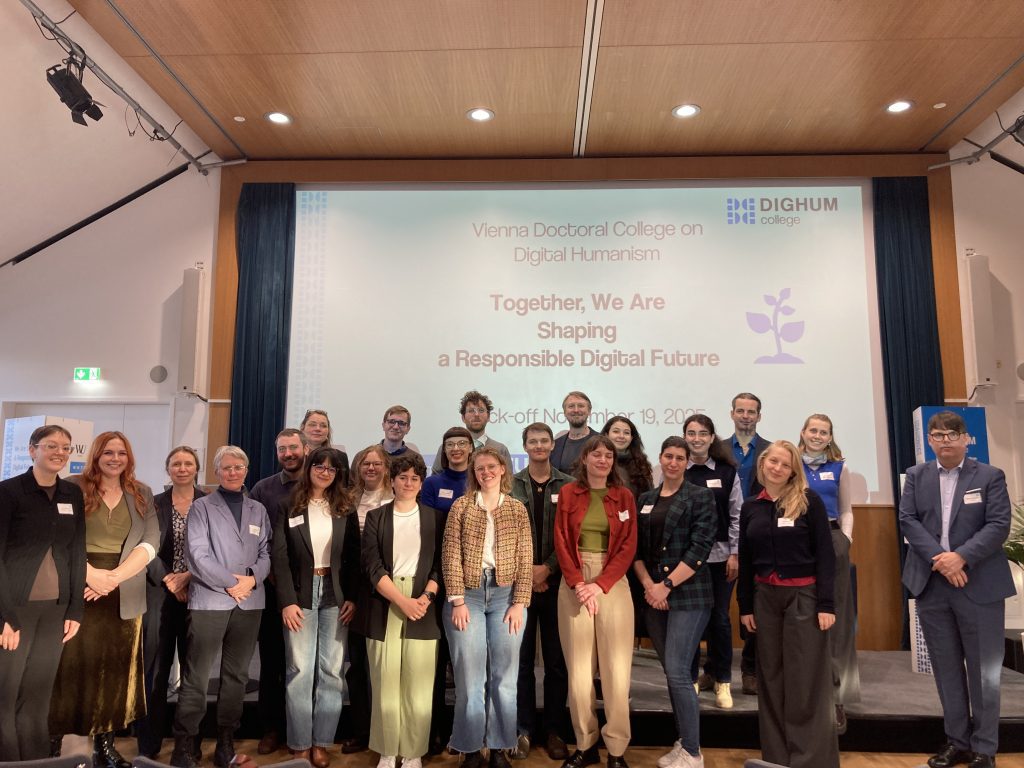
With the official launch of our Vienna Doctoral College for Digital Humanism on 19 November, the City of Vienna has demonstrated being the capital of Digital Humanism. The event marks the transition from vision to implementation of a program that puts people at the centre of digital transformation. As an innovative, interdisciplinary training program, we are dedicated to exploring how technology and digitalisation can be shaped responsibly and ethically. The kick-off was the perfect opportunity to present how we implement this exploring.
A Vibrant Kick-off Event at Vienna’s Urania Observatory
The kick-off event at the historic Vienna Urania provided valuable insights – from strategy of the City of Vienna until its practical implementation in our DocCollege.
In her opening remarks, Veronika Kaup-Hasler, Vienna City Councillor for Culture and Science, emphasized the importance of bridging theory and practice while keeping human needs at the forefront. Michael Strassnig, Deputy Managing Director of the WWTF, highlighted the City of Vienna’s wide range of activities and funding initiatives that promote Digital Humanism as a strategic priority.
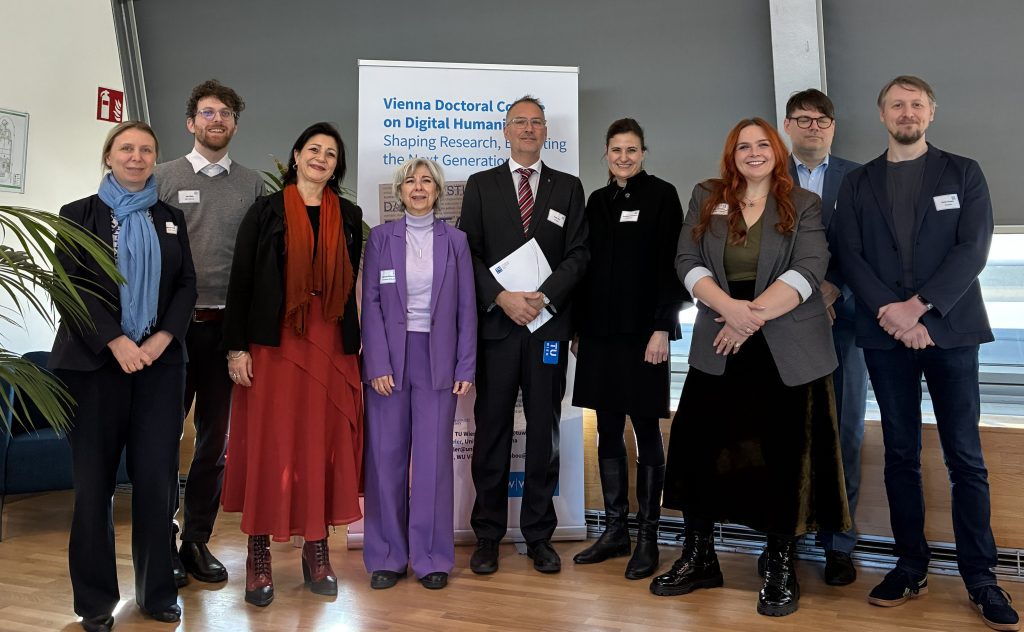
The vice-rectors of our participating universities – Peter Ertl (TU Wien), Manuela Baccarini (University of Vienna), and Bernadette Kamleitner (WU Vienna) – reinforced the necessity of a joint, interdisciplinary approach. They stressed that technological development is never neutral, but is shaped by social, cultural, and economic contexts.
Interdisciplinary Research in Action
A core component of the doctoral programme is its focus on interdisciplinary methodologies. The scientific coordinators Peter Knees (TU Wien, UNESCO Chair on Digital Humanism), Sophie Lecheler (University of Vienna), Marta Sabou and Jan Maly (both WU Vienna) explained how different academic perspectives and methods are integrated to address complex digital challenges.
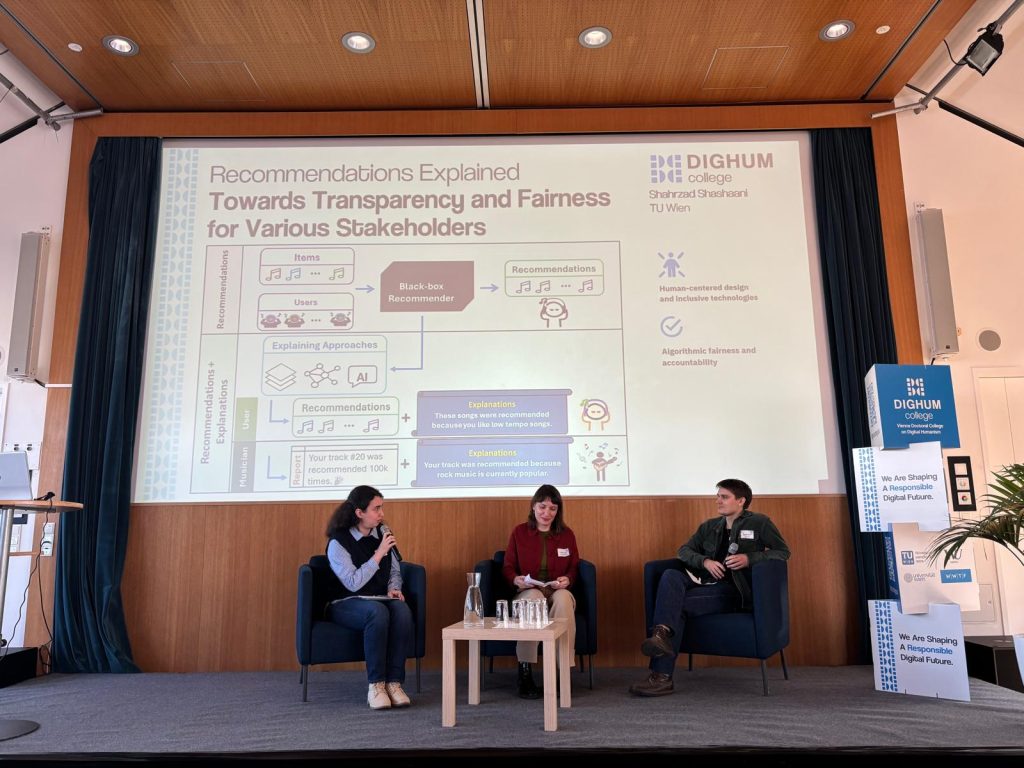
The PhD Project presentations by the doctoral students showcased this interdisciplinary practice in action, offering concrete examples of how diverse research approaches can be combined to generate insights and propose valuable and meaningful solutions.
The event concluded with an inspiring keynote by Katja Mayer (University of Vienna), who directly engaged with the students’ projects and reflected on their significance within the broader landscape of Digital Humanism.
Photo Credits: Pic 1: WU Wien / C. Bachmaier, Pic 2 + 3: WWTF / P. Steinkogler